
.jpeg)
Comprehensive analysis of the main efficacy and therapeutic effects of acalatinib
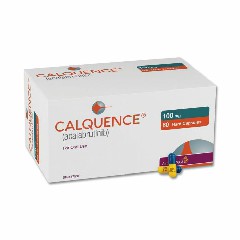
Acalabrutinib, also known as acalabrutinib, is a new generation of BTK (Bruton's tyrosine kinase) inhibitor that is widely used to treat a variety of B cell malignancies. As a more selective and better tolerated BTK inhibitor, acotinib is considered an "upgraded version" after ibrutinib (Ibrutinib) , has significant clinical efficacy and better safety, especially in the treatment of chronic lymphocytic leukemia (CLL) and mantle cell lymphoma (MCL). This article will comprehensively analyze the main efficacy and therapeutic effect of acotinib from the aspects of pharmacological mechanism, indications, clinical efficacy, comparison with ibrutinib, adverse reactions and clinical management.
1. Pharmacological mechanism: highly selective inhibitionBTK
Acotinib is an irreversibleBTKtyrosine kinase inhibitor that binds to the cysteine residue in the BTK active site (Cys481) forms a covalent bond, thereby blocking the B cell receptor (BCR) signaling pathway. The BCR pathway plays a key role in the development of various B cell malignancies, and BTK is one of the core kinases in this pathway.
Unlike the first-generation BTK inhibitor ibrutinib, acotinib has higher selectivity and a stronger affinity for BTK and EGFR The inhibitory effect of other kinases such as , ITK, TEC is greatly reduced, so non-target related adverse reactions can be reduced, such as rash, diarrhea, arrhythmia, etc. This high selectivity allows acotinib to maintain anti-tumor activity while improving the safety and tolerability of the drug.
2. Scope of indications: with CLL and MCL as the core
Acotinib is approved in multiple countries for the treatment of the following indications:
Chronic lymphocytic leukemia (CLL)/Small lymphocytic lymphoma (SLL):
This is the main indication for acotinib. The drug can be used for treatment-naïve patients as well as relapsed or refractory patients who have received other treatments in the past. Its efficacy has been confirmed in multiple large clinical studies.
Mantle cell lymphoma (MCL):
Applicable to patients who have received at least one treatment regimen but have relapsed or refractory disease. Although MCL progresses rapidly, acotinib can effectively delay the progression of the disease and improve the remission rate.
In addition, acotinib has been used in multiple clinical trials to study marginal zone lymphoma (MZL), primary central nervous system lymphoma and other B cell tumors, showing potential prospects for expanding indications.
3. Clinical efficacy analysis: obvious advantages compared with ibrutinib
The clinical efficacy of acotinib has been confirmed in multiple international multi-center studies, the most representative of which are the two key phase III clinical trials of ELEVATE-TN and ASCEND.
ELEVATE-TNResearch:
Compare acotinib single agent, acotinib+obinutuzumab combination therapy and chemotherapy+antiCD20 antibody regimen. The results showed that the progression-free survival (PFS) of the acotinib combined with obinutuzumab group was significantly better than the standard chemotherapy regimen, and the 3 yearPFS rate was close to 90%. Akolitinib monotherapy also showed excellent tolerability and sustained response rates.
ASCENDResearch:
For relapsed/refractoryCLL patients, the median PFS in the acotinib group has not yet been reached, while that in the control group was 16.5 months, showing a clear efficacy advantage.
Compared with ibrutinib, acotinib has similar therapeutic effects but has fewer adverse reactions and a lower discontinuation rate. In the head-to-head ALPINE trial, acotinib showed a lower incidence of atrial fibrillation and a better safety profile.
4. Adverse reactions and management: good safety and high tolerability
Although acotinib is a targeted drug, some predictable adverse reactions may still occur during use, mainly including:
Headache: It is one of the most common adverse reactions. About 30% of patients report mild to moderate headache, but most of them are short-lived and can be cured by themselves.
Diarrhea and fatigue: Mild diarrhea is more common but less severe than with ibrutinib and usually does not require discontinuation of treatment.
Infection risk: BecauseBTK is involved in immune cell function, some patients may develop respiratory infections, and attention should be paid to observing body temperature and respiratory symptoms.
Hematological abnormalities: such as neutropenia, anemia, etc., generally appear in the early stages of treatment and require regular blood routine monitoring.
Cardiotoxicity: Compared with ibrutinib, acotinib has a significantly lower risk of causing atrial fibrillation and hypertension, making it more suitable for patients with underlying heart diseases.
Overall, acotinib has better safety performance, most adverse reactions are controllable and reversible, and patients' compliance and quality of life are more secure.
5. Usage, dosage and clinical use suggestions
The recommended usage of acotinib is: 100 mg twice a day, each time, orally, regardless of diet. The medicine should be swallowed whole and should not be chewed, broken or crushed. During treatment, blood routine, electrolytes, liver and kidney functions should be monitored regularly, and the risk of infection and bleeding should be paid attention to.
In clinical practice, it is often used in combination with anti-CD20 antibodies such as obinutuzumab to enhance the depth of treatment; it can also be used as a single agent for long-term maintenance treatment, especially for elderly patients or patients with multiple comorbidities.
Acotinib is an innovative drug that represents a new generation of BTK inhibitors. It has significant advantages such as high selectivity, good tolerability, and sustained efficacy. It has become an important treatment option for B cell malignant tumors such as CLL and MCL. Compared with ibrutinib, acotinib has more advantages in adverse reaction control and long-term medication safety, and is especially suitable for patients who require long-term oral targeted therapy. In the future, with the expansion of indications and the accumulation of real-world data, acotinib is expected to play a wider role in the field of precision treatment of lymphoma.
Reference materials:https://www.drugs.com
[ 免责声明 ] 本页面内容来自公开渠道(如FDA官网、Drugs官网、原研药厂官网等),仅供持有医疗专业资质的人员用于医学药学研究参考,不构成任何治疗建议或药品推荐。所涉药品可能未在中国大陆获批上市,不适用于中国境内销售和使用。如需治疗,请咨询正规医疗机构。本站不提供药品销售或代购服务。


