
.jpeg)
What type of chemotherapy drug does Thiotepa belong to and its detailed mechanism?
Thiotepa (Thiotepa) is a chemotherapy drug that belongs to the alkylating agent class, specifically a triethyleneimine compound. This type of drug is known for its ability to directly form covalent bonds with DNA, thereby blocking DNA replication and transcription. It is a classic cell cycle non-specific anti-cancer drug. Thiotepa is commonly used to treat a variety of solid tumors including breast cancer, ovarian cancer, bladder cancer, brain tumors, etc. It can also be used as a pretreatment program before hematopoietic stem cell transplantation, and is especially widely used in pediatric malignant tumors and lymphomas.
Its mechanism of action is mainly through activation to form a highly reactive ethyleneimine ring, which forms an adduct with the nitrogen atom of guanine or adenine on the DNA chain. This covalent binding will cause cross-linking or breakage of DNA chains, thereby interfering with DNA replication and RNA synthesis, ultimately leading to cell apoptosis. Because its action does not depend on specific cell cycle stages, thiotepa can act on tumor cells in any proliferation state, enhancing its killing power in malignant and rapidly proliferating tumors.
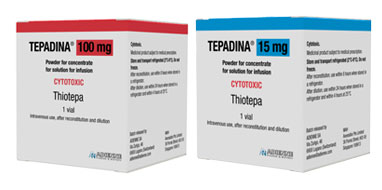
It is worth noting that thiotepa is metabolized in the body into a more active metaboliteTEPA (triethylenephosphoramide), which continues and enhances the alkylating activity of the parent drug. Due to its high lipid solubility, thiotepa also has a certain central penetration ability and has unique advantages in the treatment of certain central nervous system tumors (such as brain tumors). In addition, thiotepa is also used for local infusion treatment of bladder cancer to reduce systemic toxic side effects.
In general, thiotepa is a classic and versatile alkylating chemotherapy drug that achieves broad-spectrum anti-cancer effects by destroying theDNA structure. Due to its potent cytotoxicity, patients need to be closely monitored for bone marrow suppression, infection risk, liver and kidney function and other indicators during use. Doctors usually comprehensively judge whether thiotepa is suitable for use based on the patient's tumor type, tolerance, and treatment stage, and will also adjust the dose based on efficacy and toxicity risks.
Reference materials:https://www.drugs.com/seladelpar.html
[ 免责声明 ] 本页面内容来自公开渠道(如FDA官网、Drugs官网、原研药厂官网等),仅供持有医疗专业资质的人员用于医学药学研究参考,不构成任何治疗建议或药品推荐。所涉药品可能未在中国大陆获批上市,不适用于中国境内销售和使用。如需治疗,请咨询正规医疗机构。本站不提供药品销售或代购服务。


