
.jpeg)
Which one is more effective, Ustekinumab or Secuqiyu?
Ustekinumab (Ustekinumab) and Secukinumab (Secukinumab) are two biologic immunosuppressive drugs commonly used in clinical practice. They are mainly used to treat chronic autoimmune diseases such as moderate to severe plaque psoriasis and psoriatic arthritis. There are obvious differences between the two in terms of mechanism of action, speed of onset of action, indications, maintenance of efficacy and adverse reactions. Which drug is more suitable depends on the patient's specific condition and individual differences. This article will conduct a comprehensive comparison and analysis from multiple dimensions.
1. The difference between mechanism of action and target
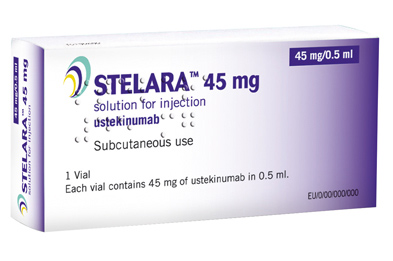
Ustekinumab is a humanized IgG1κ monoclonal antibody that mainly targets interleukin 12 (IL-12) and interleukin 23 ( The p40 subunit of IL-23 blocks the activity of these two cytokines, thereby inhibiting the immune response of Th1 and Th17 two helper T cells. This mechanism allows ustekinumab to exhibit broad-spectrum anti-inflammatory effects in a variety of immune-mediated diseases, such as plaque psoriasis, psoriatic arthritis, Crohn's disease, and ulcerative colitis.
In contrast, secukinumab is a fully human IgG1/κ monoclonal antibody that specifically targets interleukin 17A (IL-17A ). IL-17A is a key factor in Th17 cells mediating inflammatory responses and plays a central role in the pathogenesis of diseases such as psoriasis and ankylosing spondylitis. By precisely inhibiting IL-17A, secukinumab has a more direct immunosuppressive effect in controlling psoriatic lesions and joint inflammation.
2. Differences in onset speed and clinical efficacy
From clinical studies, secukinumab performs better than ustekinumab in terms of the speed of treatment onset. In multiple international multicenter studies, patients received 4 weeks and 12 weeks of PASI. The achievement rates of 75 (Psoriasis Area and Severity Index improvement 75%) and PASI 90 were generally higher than with ustekinumab. For example, the CLEAR study showed that Treasurer Qi especially performed well on the PASI 90 in Week 16The achievement rate was approximately 79% compared with 57% for ustekinumab.
However, from the perspective of long-term efficacy maintenance, the efficacy of the two tends to be consistent. Many patients can achieve a high remission rate after receiving ustekinumab treatment for more than 6 months, especially in patients with stable psoriasis. The administration cycle of ustekinumab is relatively long (one injection 4 weeks after the first injection, and then every 12 weeks), which is more convenient during the maintenance phase and improves patient compliance.
3. Comparison of safety and side effects
In terms of safety, both drugs performed well, but they also have their own characteristics. Ustekinumab has a wider range of targets (simultaneously inhibiting IL-12 and IL-23) and has a more comprehensive intervention on the immune system. It is generally believed that the risk of infection is slightly lower, and there are fewer reports of serious infections with long-term use.
Since Sikuqiyou focuses on IL-17A, its immunosuppression is more "precise", but some patients may develop mucosal fungal infections (such as thrush), upper respiratory tract infections, and potential exacerbations of inflammatory bowel disease during use. Therefore, ustekinumab is generally more recommended for patients with or suspected Crohn's disease or sensitive intestinal disorders.
In addition, local reactions, itching and other uncomfortable reactions after Sekuqiyu injection are relatively common, but generally mild. In general, the side effects of both are generally within controllable range and need to be monitored and adjusted based on individual differences.
4. Scope of indications and patient selection suggestions
From the scope of indications, ustekinumab has wider applications in psoriasis and inflammatory bowel disease (IBD). It is one of the few biologics that can be used to treat both Crohn's disease and psoriasis, making it more suitable for patients with multiple immune diseases.
Sikuqiyou is particularly prominent in ankylosing spondylitis and psoriatic arthritis. Its simultaneous efficacy in controlling joint pain, bone destruction and improving skin lesions is a plus. If the patient's main symptom is joint swelling and pain, or if the patient wants faster relief from skin lesions, Sukuchiyu may be a better choice.
In addition, price and medical insurance reimbursement also affect drug selection. In China, both ustekinumab and secukinumab have been included in the medical insurance catalog, which greatly reduces the burden on patients. However, the medical insurance reimbursement ratio and process are slightly different in different regions. It is recommended that patients consult the local hospital or medical insurance bureau to understand the policy before taking the medicine.
Taken together, ustekinumab and secukinumab have their own characteristics, and the advantages and disadvantages cannot be judged simply by "which one is more effective". If the patient pursues quick onset of action and is sensitive to skin symptoms, Secuqiyu may be given priority; if the patient has multiple immune problems such as intestinal tract and joints, ustekinumab may be more suitable. Clinically, it is recommended that professional doctors formulate the most appropriate individualized treatment plan based on the patient's medical history, severity of illness, accompanying symptoms, and medication tolerance.
Reference materials:https://www.drugs.com/seladelpar.html
[ 免责声明 ] 本页面内容来自公开渠道(如FDA官网、Drugs官网、原研药厂官网等),仅供持有医疗专业资质的人员用于医学药学研究参考,不构成任何治疗建议或药品推荐。所涉药品可能未在中国大陆获批上市,不适用于中国境内销售和使用。如需治疗,请咨询正规医疗机构。本站不提供药品销售或代购服务。


