
.jpeg)
Are there any possible side effects and risk warnings for EIKANCE 0.01% Atropine Sulfate Eye Drops?
0.01% Atropine Sulfate Eye Drops (EIKANCE) is a low-concentration atropine preparation used to delay the progression of myopia in children. It is generally considered to be relatively safe, but it may still cause certain side effects and risks, especially in the case of individual sensitive constitutions or long-term use. Parents need to be aware of potential adverse reactions during use and work closely with ophthalmologists to ensure medication safety.
0.01%Atropine’s low concentration and relatively few side effects are the main reasons for its widespread use. However, some children still experience mild eye irritation, such as brief stinging, foreign body sensation, or red eyes. In addition, some patients may temporarily experience symptoms such as slight difficulty in near vision and sensitivity to light (photophobia) after initial use of the drug. This is mainly a physiological response to mild pupil dilation caused by the drug, and can generally be adapted or relieved after continued use of the drug.
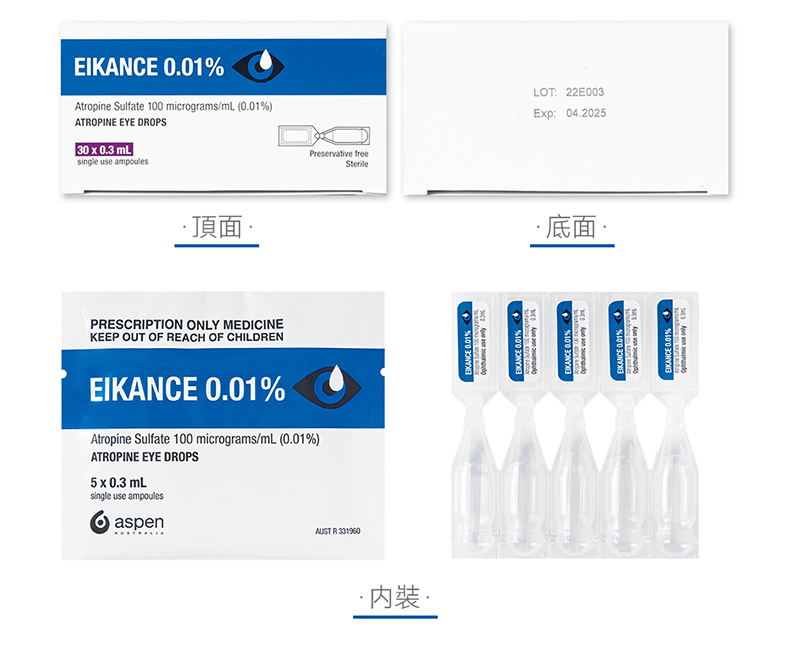
A very small number of children may experience more obvious reactions such as photophobia, blurred vision, or distraction, especially when exposed to strong light outdoors. In this case, they can be improved by wearing sunglasses. A very small number of children may be sensitive to the components of atropine, manifesting as allergic reactions such as eyelid redness and swelling, conjunctival congestion, etc. Once this occurs, the drug should be stopped immediately and seek medical attention.
Although current research shows that long-term use of 0.01%atropine eye drops is relatively safe, regular eye examinations are still required to observe changes in intraocular pressure, visual acuity, refractive status and other indicators to prevent potential drug accumulation effects. Some studies suggest that long-term mild pupil dilation may affect night vision or visual clarity in dark environments. Parents should pay attention to their children's feedback and life performance.
In order to reduce the risk of side effects, it is recommended to strictly follow the instructions of your ophthalmologist to take the medication on time and not to increase or decrease the dose or frequency at will. When taking medication, be careful to avoid the liquid flowing into the mouth and nose to avoid systemic absorption and wider reactions. At the same time, regular follow-up visits are required to evaluate whether to continue treatment or adjust the plan based on the child's eye condition.
In summary,EIKANCEThe side effects are generally controllable, but parents cannot take it lightly. Scientific monitoring, standardized use and physician guidance are the core to ensuring treatment effectiveness and medication safety.
Reference materials:https://www.medsafe.govt.nz/profs/datasheet/e/EikanceEyeDrops.pdf
[ 免责声明 ] 本页面内容来自公开渠道(如FDA官网、Drugs官网、原研药厂官网等),仅供持有医疗专业资质的人员用于医学药学研究参考,不构成任何治疗建议或药品推荐。所涉药品可能未在中国大陆获批上市,不适用于中国境内销售和使用。如需治疗,请咨询正规医疗机构。本站不提供药品销售或代购服务。


