
.jpeg)
Summary of key contents of the official instructions of Adalimumab
Adalimumab is a fully human anti-TNF-α monoclonal antibody. The more common trade name is Humira. It is a prescription biologic that is widely used to treat a variety of autoimmune diseases, such as rheumatoid arthritis, ankylosing spondylitis, psoriasis, Crohn's disease, ulcerative colitis, and others. The following is the core key content compiled based on its official instructions to facilitate patients and their families to understand its usage, safety and treatment scope.
1. Indications and mechanism of action
Adalimumab's primary role is to target and inhibit tumor necrosis factorα (TNF-α), a cytokine that plays a key role in a variety of inflammatory and autoimmune diseases. By neutralizing TNF-α, adalimumab can effectively reduce the inflammatory response, prevent disease progression, and improve patient symptoms.
Its indications mainly include:
Rheumatoid arthritis (RA): for adults with moderate to severe activityRA, combined with methotrexate or alone;
Juvenile idiopathic arthritis (JIA): used for 2 active polyarticular arthritisJIAchildren;
Ankylosing spondylitis (AS);
Psoriatic arthritis (PsA);
Moderate to severe plaque psoriasis (Ps);
Crohn's disease (CD): including adults and children 6 years old and above;
Ulcerative colitis (UC): used for adults with moderate to severe UC;
Uveitis: Applicable to non-infectious intermediate, posterior or panuveitis.
2. Usage, dosage and dosage form specifications
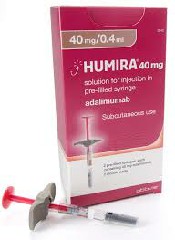
Adalimumab is a subcutaneous injection, usually containing 40mg per vialActive ingredient, usually in a prefilled pen or syringe. The standard recommended dosage is as follows:
Rheumatoid arthritis/Psoriatic arthritis/Ankylosing spondylitis: Adults: 40mg once every two weeks;
Crohn's disease: Initial dose is usually 160mg (fractionated injection), followed by 80mg after two weeks, then maintenance to 40mgevery two weeks;
Psoriasis: Initial dose80mg, then every 2 weeks40mg;
Juvenile Arthritis and Crohn's Disease in Children: Adjust dosage based on weight;
Uveitis: Treatment options are similar to those for adult arthropathy.
Patients should follow their doctor's instructions and avoid changing the dosage or injection frequency without permission. Injection sites should be rotated to avoid recurrence of local reactions.
3. Safety and precautions
Although adalimumab is a targeted agent, it still has a series of potential side effects that need attention:
Increased risk of infection:TNF-alpha inhibition may reduce the body's ability to fight infections, especially tuberculosis, fungal, or opportunistic infections. Tuberculosis screening is required before use. If you have fever, cough, or fatigue during treatment, you should seek medical treatment in time.
Risk of malignant tumors: There are a few reports showing that long-term use of TNF inhibitors has a slightly increased risk of malignant lymphoma, especially in children and adolescents.
Injection site reactions: including redness, swelling, itching, pain, etc., most are mild and self-limiting.
Other adverse reactions: including headache, rash, nausea, myalgia, blood abnormalities, etc.
Pregnant women, lactating women and patients with immunosuppressed conditions need to be particularly cautious when using adalimumab, and their use must be decided by a doctor after assessing the risks.
4. Combined medication and contraindications
Adalimumab is often combined with immunomodulatory drugs such as methotrexate to enhance the therapeutic effect and reduce antibody production. However, it is necessary to avoid combination with other biological agents (such as other TNF inhibitors, IL-6Antagonists, etc.) should be used in combination to avoid increasing the risk of infection or immune-related side effects.
Taboo groups include:
Patients with active infections (such as tuberculosis, sepsis, etc.);
Those who are allergic to the active ingredients of adalimumab or any excipients;
Use with caution in patients with moderate to severe heart failure.
5. Storage and patient management suggestions
Adalimumab should be stored refrigerated from 2°C to 8°C, avoiding freezing and direct sunlight. It can be left at room temperature for 15 to 30 minutes before use to reduce injection discomfort. Do not throw away unused medicines by yourself. They should be handed over to a professional medicine recycling agency for disposal.
Patients should receive injection training before use to ensure that they can safely inject at home, and undergo regular hematology monitoring and condition assessment. Doctors may adjust treatment strategies based on efficacy, including switching to biologics or combining other DMARDs (disease-modifying antirheumatic drugs).
Adalimumab, as a mature anti-TNF-α biological agent, has been widely proven to be effective in a variety of immune-related diseases. Although it is more expensive and needs to be used with caution, its good efficacy, low systemic side effects and wide range of indications give it an irreplaceable and important position in the treatment of autoimmune diseases. If patients need to use it, they must conduct evaluation and treatment under the guidance of a professional doctor.
Reference materials:https://www.drugs.com/seladelpar.html
[ 免责声明 ] 本页面内容来自公开渠道(如FDA官网、Drugs官网、原研药厂官网等),仅供持有医疗专业资质的人员用于医学药学研究参考,不构成任何治疗建议或药品推荐。所涉药品可能未在中国大陆获批上市,不适用于中国境内销售和使用。如需治疗,请咨询正规医疗机构。本站不提供药品销售或代购服务。


