
.jpeg)
Standard dose of capmatinib and dosage for special populations
Capmatinib is an oral selective tyrosine kinase inhibitor (TKI) targeting the MET gene mutation. It is mainly used to treat patients with non-small cell lung cancer (NSCLC) with MET exon 14 skipping mutations. The standard recommended dose is 400 mg twice daily, with good bioavailability achieved whether taken with or without food. This dosage setting is determined based on the balance between efficacy and safety in multiple clinical studies. The purpose is to ensure that the drug maintains a stable and effective blood concentration in the body to inhibit the growth of cancer cells. This dosage regimen is well tolerated by the vast majority of patients, but may need to be adjusted on an individual basis in certain populations.
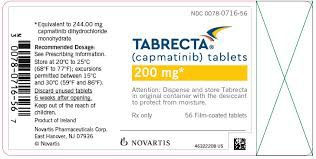
In terms of special populations, for patients with mild or moderate hepatic impairment (such asChild-Pugh class A or B), there is currently no recommended dose adjustment because studies have shown that the effect on drug metabolism is not significant. However, for patients with severe hepatic impairment (Child-Pugh class C), since the clearance of the drug in the body may be significantly reduced, the risks and benefits need to be carefully evaluated. There is no clear dosage guidance, and it is recommended that experienced oncologists make individual decisions. In terms of renal function, patients with mild to moderate renal impairment usually do not require dose adjustment, but for patients with severe renal impairment, use under close monitoring is recommended because the research data are insufficient.
In addition, for elderly patients, those who are underweight, or those who takestrong inhibitors of CYP3A4 (such as clarithromycin, itraconazole), attention should be paid to the possible changes in the metabolism rate of the drug in the body, resulting in an increased risk of adverse reactions, such as increased liver enzymes, edema, fatigue, etc. Although routine dose adjustment is not recommended clinically, it is a clinical consensus to monitor toxic reactions and make timely adjustments based on tolerance. In addition, some patients may develop drug-related interstitial lung disease or liver toxicity during treatment. If moderate to severe side effects occur, clinical recommendations should be to temporarily discontinue the drug or reduce the dose, and decide whether to resume treatment based on evaluation after symptoms are relieved.
Reference materials:https://www.drugs.com/mtm/capmatinib.html
[ 免责声明 ] 本页面内容来自公开渠道(如FDA官网、Drugs官网、原研药厂官网等),仅供持有医疗专业资质的人员用于医学药学研究参考,不构成任何治疗建议或药品推荐。所涉药品可能未在中国大陆获批上市,不适用于中国境内销售和使用。如需治疗,请咨询正规医疗机构。本站不提供药品销售或代购服务。


