
.jpeg)
Which class of antibiotics does Cycloserine belong to and its mechanism of action?
Cycloserine (Cycloserine) is an antibiotic used against tuberculosis. It is a second-line anti-tuberculosis drug and is mainly used in clinical treatment for tuberculosis patients who are resistant to first-line anti-tuberculosis drugs (such as isoniazid and rifampicin). It is a natural antibiotic produced by Streptomyces orchidaceus and can also be synthesized chemically. Due to its good anti-tuberculosis effect, it plays an important role in the treatment plan for multidrug-resistant tuberculosis (MDR-TB).
In terms of classification, cycloserine belongs to the synthetic antibiotics, rather than the common β-lactam or aminoglycoside antibiotics. Its antibacterial spectrum is narrow, mainly targeting Mycobacterium tuberculosis (Mycobacterium tuberculosis) and certain Gram-positive and Gram-negative bacteria. However, due to its strong neurotoxicity, it is not commonly used clinically to treat non-tuberculous infections.
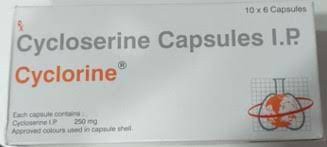
Its mechanism of action is to kill bacteria by inhibiting bacterial cell wall synthesis. Cycloserine is a structural analog of D-alanine, which competitively inhibits D-alanine aminotransferase (alanine racemase) and D-alanine-D-alanine synthase (D-alanine Ligase) two enzymes that prevent the formation of D-Ala-D-Ala dipeptide, a key component of the cell wall, thereby hindering the synthesis of peptidoglycan, leading to bacterial cell wall defects, lysis and death. This mechanism is different from that of penicillins, so it may also be effective against some penicillin-resistant strains.
Although cycloserine has strong anti-tuberculosis effects, its side effects, especially nervous system toxicity, are more significant, including headache, irritability, anxiety, hallucinations, depression and even epileptic seizures. Therefore, the dosage needs to be strictly monitored during use. It is generally recommended not to exceed 500~750 mg per day and be adjusted according to renal function. Patients with a history of mental illness or epilepsy should be used with caution. If necessary, vitamin B6 (pyridoxine) can be combined to reduce side effects on the central nervous system.
Reference:https://en.wikipedia.org/wiki/Cycloserine
[ 免责声明 ] 本页面内容来自公开渠道(如FDA官网、Drugs官网、原研药厂官网等),仅供持有医疗专业资质的人员用于医学药学研究参考,不构成任何治疗建议或药品推荐。所涉药品可能未在中国大陆获批上市,不适用于中国境内销售和使用。如需治疗,请咨询正规医疗机构。本站不提供药品销售或代购服务。


