
.jpeg)
What is the difference between elastran and fulvestrant?
Elacestrant and Fulvestrant are two key drugs in the field of endocrine therapy for breast cancer. Both are estrogen receptor down-regulators (SERDs). However, there are obvious differences in drug structure, mode of action, usage, pharmacokinetics and clinical indications. Understanding the difference between the two has important practical significance for patients to reasonably choose treatment options and for doctors to formulate individualized treatment strategies.
First of all, from the perspective of drug form and administration method, elastran is the first approved oralSERD drug, while fulvestrant is a traditional intramuscular injection drug. The oral dosage form of elastran allows patients to take it regularly at home, which improves treatment compliance and is especially friendly to older or mobility-impaired breast cancer patients. Fulvestrant, on the other hand, must be injected deep into the muscle by professional medical staff in the hospital, usually once a month or on a specific cycle. Although this injection method ensures the stable release of the drug effect, it imposes certain restrictions on the patient's frequency of medical visits and convenience in life.
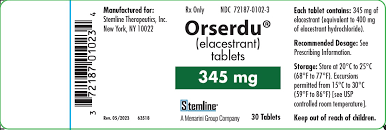
Secondly, from the perspective of molecular structure and pharmacological properties, the molecular structure of elastran is more optimized than fulvestrant and has stronger oral bioavailability. This means that elastran is absorbed more rapidly in the body, is more widely distributed, has a more stable effect, and has stronger estrogen receptor antagonism and degradation effects. Studies have shown that elastran not only effectively binds and degrades estrogen receptors, but also shows more significant activity against certain ESR1 mutant breast cancer cells, which fulvestrant is unable to do. ESR1 mutation is a common resistance mechanism in patients with hormone receptor-positive breast cancer. The ability of elastran to inhibit this mutation means that it may have higher therapeutic value in patients with ESR1 mutations who have received multiple lines of therapy in the past.
Furthermore, from the perspective of indications, fulvestrant has been widely used in the endocrine therapy of hormone receptor-positive, HER2-negative advanced breast cancer. It is especially suitable for patients who have failed treatment with non-steroidal aromatase inhibitors (such as letrozole and anastrozole). It is currently the first-line SERD drug recommended by global guidelines. Elastran is considered a "new generation oral SERD" and has been approved by the FDA in the United States in 2023 for the treatment of postmenopausal female or male breast cancer patients who are ER-positive/HER2-negative, contain ESR1 mutations, and have received at least one endocrine therapy. Although it is not yet on the market in China, judging from its positioning, elastran is expected to gradually replace some of the indications of fulvestrant, especially in response to ESR1 mutation resistance, showing more promising therapeutic potential.
In addition, from the perspective of side effects, injection-related discomforts of fulvestrant (such as pain at the injection site, inflammatory reactions, etc.) are relatively common, and may also cause side effects such as systemic fatigue and nausea. As an oral drug, elastran avoids the problems associated with injections, but it also has its own risk of adverse digestive system reactions, such as nausea, diarrhea, or loss of appetite. However, overall, the safety profile of elastran is considered controllable and well tolerated in clinical studies, especially during long-term treatment, which has less impact on patients' quality of life.
Reference materials:https://www.drugs.com/mtm/elacestrant.html
[ 免责声明 ] 本页面内容来自公开渠道(如FDA官网、Drugs官网、原研药厂官网等),仅供持有医疗专业资质的人员用于医学药学研究参考,不构成任何治疗建议或药品推荐。所涉药品可能未在中国大陆获批上市,不适用于中国境内销售和使用。如需治疗,请咨询正规医疗机构。本站不提供药品销售或代购服务。


