
.jpeg)
Precautions and contraindications for larotinib/larlotinib combined with traditional Chinese medicine
Larotrectinib As a new TRK inhibitor targeted drug, Larotrectinib has shown excellent efficacy in treating a variety of tumor patients carrying NTRK gene fusions in recent years. Its advantage is that it has no cancer species restrictions and is widely applicable to different types of solid tumors in children and adults. In domestic clinical practice, some patients tend to use traditional Chinese medicine or traditional Chinese medicine conditioning therapy in combination with western medicine targeted drugs in order to enhance immunity, alleviate side effects or improve overall physical fitness. However, caution should be exercised when using larotrectinib in combination with traditional Chinese medicine, especially drug interactions, metabolic effects, and potential toxicity risks.
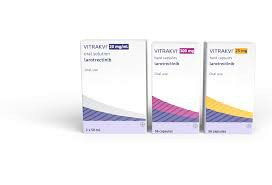
First of all, from the perspective of pharmacological mechanism, larotrectinib mainly prevents the abnormal proliferation of tumor cells by inhibiting the kinase activity ofNTRK fusion protein. It is metabolized by the CYP3A4 enzyme in the liver, and a large number of traditional Chinese medicine ingredients are also metabolized by the CYP enzyme system. For example, common Chinese herbal medicines such as astragalus, ginseng, salvia, bupleurum, and angelica contain a variety of active ingredients, which may induce or inhibit CYP3A4 enzyme activity, thereby affecting the metabolism rate of larotrectinib in the body. If traditional Chinese medicine ingredients induce the activity of this enzyme, it may accelerate the metabolism of larotrectinib and reduce the plasma concentration and therapeutic effect.
Secondly, some traditional Chinese medicines, such as aristolochic acids, toad venom, Sichuan Wu, and Cao Wu, have potential liver and kidney toxicity. If used in combination with larotinib, a toxic synergistic effect may occur, especially when larotinib has already burdened liver function, further exacerbating the risk of liver damage. In addition, traditional Chinese medicine compound dosage forms coexist with multiple ingredients, and the ingredients are complex, making it difficult to accurately control their impact on targeted drugs, so more caution is needed when using them.
In addition, drugs commonly used in traditional Chinese medicine to regulate qi and blood and enhance immunity, such as Ganoderma spore powder, cordyceps, ginseng products, etc., theoretically have certain immunomodulatory effects, but whether there is a drug resistance induction mechanism with larotrectinib has not been fully supported by research.
Reference materials:https://www.vitrakvi.com/
[ 免责声明 ] 本页面内容来自公开渠道(如FDA官网、Drugs官网、原研药厂官网等),仅供持有医疗专业资质的人员用于医学药学研究参考,不构成任何治疗建议或药品推荐。所涉药品可能未在中国大陆获批上市,不适用于中国境内销售和使用。如需治疗,请咨询正规医疗机构。本站不提供药品销售或代购服务。


