
.jpeg)
What are the ways to adjust the dose of Capmatinib if you forget to take it?
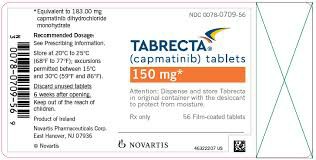
Capmatinib is an oral small molecule inhibitor that targets MET exon 14 skipping mutations and is currently approved by the FDA for the treatment of patients with this specific mutation in advanced or metastatic non-small cell lung cancer (NSCLC). The recommended standard dose is 400 mg taken orally twice a day, whether taken with or without food, and has good absorption properties. In order to ensure stable efficacy and inhibit cancer cell proliferation to the greatest extent, capmatinib needs to be taken regularly. However, in clinical reality, patients may miss doses, take medication at wrong times, or discontinue medication due to adverse reactions due to various reasons. At this time, a scientific and reasonable dose adjustment strategy should be adopted, and patients cannot take supplementary doses on their own or stop the medication abruptly, otherwise it may affect the efficacy of the drug or even induce drug resistance.
First of all, if the patient simply "forgets to take the medicine", that is, if he misses a dose of capmatinib, the correct approach is not to "take it immediately" but to "skip the missed dose and continue taking the medicine at the next scheduled time." In other words, don’t double your dose even if the interval is short. This is because capmatinib has a certain duration of blood concentration. Blindly increasing the dose will not only fail to enhance the efficacy, but may increase the risk of drug toxicity. Especially for patients with underlying diseases, impaired liver and kidney function, or who are taking other drugs, a sudden increase in blood drug concentration may cause serious adverse reactions.
In addition, in the case of vomiting after taking the medicine, if the patient suffers from severe vomiting within a short time after taking the medicine (such aswithin 1 hour), it is also not recommended to take another dose immediately. This is because it is impossible to accurately tell whether the drug has been partially absorbed. Taking additional doses may result in dose accumulation, so you should wait until the next normal dose before continuing. Patients should report such situations to their physician or pharmacist whenever possible so that further intervention can be assessed.
If a patient experiences adverse reactions related to capmatinib while continuing to take the drug, such as nausea, elevated liver enzymes, difficulty breathing, manifestations of interstitial lung disease, edema, etc., doctors will usually make dose adjustments based on the severity. According to current recommended guidelines and drug inserts, capmatinib dose adjustment generally follows a tapering strategy. In the first phase, the dose is usually lowered from 400 mg twice daily to 300 mg twice daily; if the patient still experiences intolerable adverse reactions, the dose is further reduced to 200 mg twice daily. Once the patient is unable to tolerate the lowest dose (ie, 200 mg twice daily) or develops life-threatening drug-related toxicity, it is recommended to permanently discontinue the drug and not resume capmatinib.
It is worth noting that dose adjustment will not directly lead to complete loss of efficacy. Studies have shown that capmatinib can still maintain a certain degree of inhibitory effect even under reduced dosage, especially forFor MET mutation-dependent tumors, its continuous attack on the MET signaling pathway helps to prolong the time of disease stability. Therefore, patients do not need to be overly anxious due to dose reduction. The key is to maintain continuous treatment and good compliance, while managing side effects and regular follow-up.
Reference materials:https://www.drugs.com/mtm/capmatinib.html
[ 免责声明 ] 本页面内容来自公开渠道(如FDA官网、Drugs官网、原研药厂官网等),仅供持有医疗专业资质的人员用于医学药学研究参考,不构成任何治疗建议或药品推荐。所涉药品可能未在中国大陆获批上市,不适用于中国境内销售和使用。如需治疗,请咨询正规医疗机构。本站不提供药品销售或代购服务。


