
.jpeg)
Full FDA approval highlights larotrectinib in NTRK fusion+ solid tumors
Although solid tumors carryingNTRK gene fusions remain rare, testing patients for these alterations is critical to identify those who may be eligible for targeted therapies, such as larotrectinib . With next-generation sequencing (NGS) becoming widely available to community patients and community physicians, it is definitely worth testing patients. If a patient identifies an NTRK fusion, it's like a lottery ticket for patients with metastatic disease.
On April 10, 2025, the U.S. Food and Drug Administration (FDA) fully approved larotrectinib for the treatment of patients with solid tumors that carry NTRK gene fusions without known acquired resistance mutations; are metastatic or may result in severe morbidity with surgical resection; and have no satisfactory alternative treatment options, or have experienced disease progression after prior therapy.
Summary results from3 single-arm studies - Phase 1 LOXO-TRK-14001 trial (NCT02122913), Phase 1/2 SCOUT trial (NC T02637687) and the Phase 2 NAVIGATE trial (NCT02576431) - supporting full approval of larotrectinib after the drug received accelerated approval in the same indication in November 2018
In these three studies, the overall response rate (ORR) of evaluable patients was 60% (95%CI, 55%~65%), of which the complete response rate (CR) was 24% and the partial response rate (PR) was 36% [1]. Pathological CRs occurred in 5% of patients. Median duration of response (DOR) was 43.3 months (95% CI, 32.5-not evaluable).
What is the significance of FDA’s approval of larotrectinib for the treatment of patients with NTRK fusion-positive solid tumors? In November 2018, larotrectinib was one of the first approved tumor-agnostic targeted therapies [accelerated approval]. This completely tumor-agnostic approval reiterates what was understood in 2018. These patients [who carry the NTRK fusion protein] clearly benefit from larotrectinib regardless of tumor type/There's always the concern that [accelerated approval] could be withdrawn and then the patient might no longer have the opportunity.
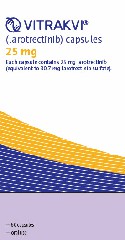
What guidance will be provided to clinicians regarding the adverse reaction (AE) profile of larotrectinib? Larotrectinib's profile is very safe. Patients may experience some adverse reactions, mainly dizziness. AEs are usually easily managed by reducing drug dosage. There are some cases of elevated liver function tests that are relatively easy to manage by maintaining and reducing the dose.
Overall, larotrectinib is one of the safest targeted drugs ever experienced. It is very safe and well tolerated. There have been patients who have been treated with larotrectinib [as part of a trial] for almost 10 years, which is surprising. Some of them were the first patients in the [initial] Phase 1 trial and they are still in the study, doing well and still tolerating the drug even 10 years later.
It is suspected that larotrectinib will be a well-tolerated drug (in clinical practice). Based on the latest data analyzed (to be presented at the 2025 ASCO Annual Meeting), the median overall survival for patients excluding patients with central nervous system metastases (treated in 3 studies) was [approximately] 44 months. These are patients with metastatic [disease], mostly chemotherapy-refractory. Seeing the level of benefit in adult NTRK fusion patients is an incredible result.
What guidance will be provided to clinicians regarding the use ofNGS when identifying patients who may be eligible for larotrectinib? There is currently no cure. This is not to say that this drug is a guaranteed cure, and many patients with metastatic disease are not cured. However, if these [NTRK fusion] patients could be identified and given larotrectinib, it would undoubtedly extend their lives.
Precision medicine and targetingWhat is the future related to NTRK fusion? There is already another drug [repotrectinib (Augtyro)] that was developed primarily for patients with ROS1-positive lung cancer. [Repotrectinib] may also target some resistance mechanisms in patients with larotrectinib. Likewise, many of these patients will continue taking larotrectinib for months, even years. However, if they do develop resistance, it usually occurs in specific regions of the NTRK target, so-called solvent front mutations and gatekeeper mutations. [Repotrectinib] can target these areas.
There are other drugs that work through the pipeline and may also be used in patients who are resistant to[larotrectinib]. There are even data suggesting that combining larotrectinib with an EGFR inhibitor may help overcome innate resistance.
References:https://www.onclive.com/view/full-fda-approval-underscores-the-role-of-larotrectinib-in-ntrk-fusion-solid-tumors
[ 免责声明 ] 本页面内容来自公开渠道(如FDA官网、Drugs官网、原研药厂官网等),仅供持有医疗专业资质的人员用于医学药学研究参考,不构成任何治疗建议或药品推荐。所涉药品可能未在中国大陆获批上市,不适用于中国境内销售和使用。如需治疗,请咨询正规医疗机构。本站不提供药品销售或代购服务。


