
.jpeg)
Introduction to the characteristics and drug information of the US version of cabozantinib
Cabozantinib is an oral anti-cancer targeted drug widely used in the treatment of a variety of solid tumors and occupies an important position in the global cancer treatment system. The drug was developed by Exelixis Inc., an American biopharmaceutical company. It was first approved by the U.S. Food and Drug Administration in 2012 for the treatment of advanced medullary thyroid cancer. Later, its indications were gradually expanded to kidney cancer, liver cancer, etc. The trade names of cabozantinib sold in the United States are Cometriq (for thyroid cancer) and Cabometyx (for kidney cancer, liver cancer, etc.). These two brands are different in dosage forms, uses, and delivery methods, demonstrating their high degree of specialization and precision in treatment strategies.
The biggest pharmacological feature of the US version of cabozantinib is its "multi-target" mechanism of action. It not only inhibits VEGFR (vascular endothelial growth factor receptor), but also acts on multiple tumor-related tyrosine kinases such as MET and AXL. Compared with a single-target TKI, the US version of cabozantinib can synergistically work at multiple levels, including anti-angiogenesis, inhibiting tumor invasion, and delaying the formation of drug resistance. This composite targeting strategy enables it to cover multiple tumor types in clinical practice, and is especially suitable for patient groups who have failed first-line treatment or require multi-line treatment. Its application in renal cell carcinoma, especially combination regimens with immunotherapy drugs such as nivolumab, has gradually become one of the standard treatments in clinical practice in the United States.
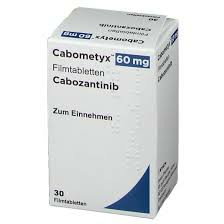
The U.S. version of cabozantinib is commonly available in oral tablets of 20 mg, 40 mg and 60 mg. The recommended dosage and usage period are determined by the patient’s disease status and the treatment plan formulated by the doctor. In the United States, the drug strictly follows the FDA's cGMP (Current Good Manufacturing Practice) standards in drug management and production. Each batch of drugs must go through a complete quality control process, and there is a strict traceability mechanism from raw material procurement, manufacturing to market distribution. This system greatly ensures the purity, bioavailability and long-term stability of drugs.
In terms of pharmacokinetics, the US version of cabozantinib has a longer half-life (approximately99 hours), which allows it to maintain effective blood concentration in the body for a longer time, supports the feasibility of a once-daily dosing regimen, and simplifies patient medication compliance. It is mainly metabolized by the hepatic CYP3A4 enzyme, so special attention should be paid to drug-drug interactions when used together, such as avoiding the simultaneous use of strong CYP3A4 inhibitors or inducers.
In addition, the U.S. version of cabozantinib is highly standardized in terms of drug labels and instructions for use, and all instructions are supported by clinical trial data and are published in It is publicly available on the FDA official website and pharmaceutical database. Before prescribing cabozantinib, doctors usually refer to guideline recommendations to ensure that the treatment strategy is consistent with the latest medical evidence.
It is worth emphasizing that although the US version of cabozantinib performs well in terms of efficacy, it is also accompanied by a series of side effects that need to be monitored, such as hypertension, fatigue, hand-foot syndrome, oral ulcers, diarrhea, etc. Especially during long-term use, special attention must be paid to the impact on liver, kidney and cardiovascular systems. Therefore, patients need to regularly review blood routine, liver function, thyroid function and electrocardiogram during use to minimize drug-related risks.
In the global pharmaceutical market, the US version of cabozantinib is widely included in clinical treatment guidelines or recommended by medical insurance in various countries due to its leading research and development, clear efficacy and high quality standards. However, its higher price also makes it difficult for many non-U.S. patients to obtain the drug directly. In order to solve this problem, some patients will obtain original drugs through transnational drug purchasing platforms or international medical channels, especially for countries or regions where cabozantinib treatment cannot be covered by medical insurance.
Reference:https://en.wikipedia.org/wiki/Cabozantinib
[ 免责声明 ] 本页面内容来自公开渠道(如FDA官网、Drugs官网、原研药厂官网等),仅供持有医疗专业资质的人员用于医学药学研究参考,不构成任何治疗建议或药品推荐。所涉药品可能未在中国大陆获批上市,不适用于中国境内销售和使用。如需治疗,请咨询正规医疗机构。本站不提供药品销售或代购服务。


