
.jpeg)
How effective is filgotinib in clinical trials?
As a selective JAK1 inhibitor, filgotinib has attracted widespread attention in the treatment of rheumatoid arthritis (RA) in recent years. It specifically inhibits the JAK1 signaling pathway and regulates the overactivity of inflammatory cytokines, thereby effectively reducing joint inflammation and pain in patients and improving functional status. Multiple large-scale clinical trials have revealed the significant efficacy of filgotinib in the treatment of RA, showing its broad applicability and superior safety in different patient groups, making it a new treatment option in the rheumatology and immunology community.
First, filgotinib showed promising clinical results in three pivotal studies in patients with moderate to severe rheumatoid arthritis. The first study included 1,755 patients who had failed to respond to methotrexate (MTX) and who continued to receive filgotinib while maintaining methotrexate. The results showed that 77% of patients showed significant symptom improvement at 12 weeks, which was higher than 71% of patients treated with adalimumab and 50% of patients treated with placebo, showing that filgotinib has a competitive advantage in relieving arthritis symptoms. Compared with traditional biologics, filgotinib's convenience of oral administration and good tolerability provide patients with more flexible treatment options.
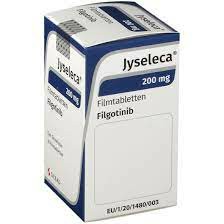
The second study focused on the patient group whose treatment with biological DMARDs was ineffective or insufficient. A total of 448 patients participated, all of whom continued to receive conventional DMARDs treatment, and about 80% of the patients took methotrexate. In this study, 66% of filgotinib patients had significant improvement in symptoms after 12 weeks, compared with only 31% of the placebo group, further proving the efficacy of filgotinib in patients with refractory rheumatoid arthritis. This result highlights the therapeutic potential of filgotinib in patients who fail to respond to traditional treatments, providing clinicians with more solutions.
The third study looked at 1,249 patients who had never received methotrexate but were at high risk of disease progression. The third study compared three treatment options: filgotinib plus methotrexate, filgotinib alone, and methotrexate alone. After 24 weeks, 81% of patients in the combination group had significant improvement in symptoms, and the improvement rates in the filgotinib alone group and the methotrexate alone group were 78% and 71% respectively. This shows that filgotinib can not only achieve significant efficacy when used alone, but also has more significant efficacy when combined with methotrexate, providing an important basis for the treatment of early high-risk patients.
In addition to rheumatoid arthritis, filgotinib is used in ulcerative colitis (Applications in UC) are also gradually emerging. For UC patients who had previously received or not received biological agents, after 10 weeks of short-term treatment with filgotinib, 26% of patients not using biological agents developed mild or asymptomatic symptoms, which was significantly higher than the 15% in the placebo group. In the prior treatment group with biologics, 11% of patients with filgotinib achieved mild or asymptomatic status, which was significantly better than the 4% in the placebo group. Follow-up for up to 58 weeks showed that 37% of patients in the filgotinib treatment group maintained mild or asymptomatic disease, compared with only 11% in the placebo group. These data indicate that filgotinib not only improves joint symptoms but also effectively controls intestinal inflammation by regulating immune-inflammatory responses, demonstrating cross-disease therapeutic potential.
Reference materials:https://go.drugbank.com/drugs/DB14845
[ 免责声明 ] 本页面内容来自公开渠道(如FDA官网、Drugs官网、原研药厂官网等),仅供持有医疗专业资质的人员用于医学药学研究参考,不构成任何治疗建议或药品推荐。所涉药品可能未在中国大陆获批上市,不适用于中国境内销售和使用。如需治疗,请咨询正规医疗机构。本站不提供药品销售或代购服务。


