
.jpeg)
What important information is included in the instructions for pomalidomide?
Pomalidomide (Pomalidomide) is a drug with immunomodulatory and anti-tumor activity. It is mainly used clinically to treat refractory or relapsed diseases such as multiple myeloma (MM) and Kaposi's sarcoma (KS). It is a structural analog of thalidomide and belongs to the immunomodulatory drug (IMiDs) drug family, which has multiple inhibitory effects on specific tumor cells and their microenvironment. From its globally published instructions, a series of information that is extremely critical for clinical use can be extracted. These points not only involve indications and dosage, but also include dosage adjustment, safety monitoring, drug interactions, contraindications, pregnancy risks, and patient education.
First, core indications for pomalidomide include relapsed or refractory multiple myeloma and AIDS-related or non-AIDS-related Kaposi's sarcoma. For patients with multiple myeloma, its use requires that the patient has received at least two treatments, including lenalidomide and a proteasome inhibitor (such as bortezomib), and that the disease has progressed shortly after the completion of the previous course of treatment. This background of use shows that pomalidomide is usually used as third-line and beyond therapy, focusing more on coping strategies after resistance to treatment failure. In the case of Kaposi's sarcoma, especially in patients with AIDS-related KS who have failed HAART or in patients with HIV-negative KS, pomalidomide provides a new treatment possibility that can help relieve symptoms and delay disease progression.
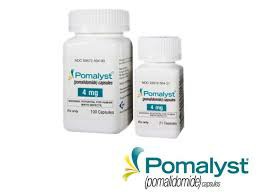
In terms of usage and dosage, the instructions clearly indicate that pomalidomide should be taken orally at a fixed daily dose. The recommended dose is4 mg/day (for MM) or 5 mg/day (for KS). It should be taken continuously for 21 days and then rested for 7 days, forming a complete treatment cycle of 28 days. This periodic dosing approach is designed to balance efficacy and tolerability to minimize drug-related toxicity. It is particularly important to point out that patients with liver and kidney dysfunction need to adjust the dosage individually to avoid drug accumulation in the body, which may lead to aggravation of adverse reactions.
The warnings about adverse reactions in the instructions are also very detailed. The most common side effects include bone marrow suppression (such as neutropenia, anemia, thrombocytopenia), lung infection, fatigue, rash and constipation. In severe cases, thrombotic events such as deep vein thrombosis and pulmonary embolism may occur, requiring combined anticoagulant treatment. In addition, pomalidomide's regulation of the immune system may also induce secondary primary tumors or immune-related complications. Therefore, blood changes and symptoms must be closely monitored during treatment. For female patients, especially those of childbearing age, the instructions specifically emphasize that pomalidomide is highly teratogenic and should be absolutely avoided during pregnancy. A pregnancy test should be performed before treatment and dual contraceptive measures should be used. Male patients also need to be aware of the risk of drug transmission through semen, so they should take contraceptive measures for at least 28 days after the end of treatment.
The instructions also emphasize the importance of patient education and monitoring. Due to the teratogenicity and immunomodulatory mechanism of pomalidomide, all patients should undergo systematic training and sign a relevant risk-informed agreement before taking the drug. At the same time, drugs usually need to be distributed within a specific project registration platform, and the entire process of use must be tracked and recorded, including regular blood tests, liver and kidney function assessment, and symptom follow-up, so that potential toxicity can be detected and intervened in a timely manner.
Reference materials:https://en.wikipedia.org/wiki/Pomalidomide
[ 免责声明 ] 本页面内容来自公开渠道(如FDA官网、Drugs官网、原研药厂官网等),仅供持有医疗专业资质的人员用于医学药学研究参考,不构成任何治疗建议或药品推荐。所涉药品可能未在中国大陆获批上市,不适用于中国境内销售和使用。如需治疗,请咨询正规医疗机构。本站不提供药品销售或代购服务。


