
.jpeg)
Bosutinib/bosutinib or imatinib, which one is more effective in treating chronic myelopathy?
In the treatment field of chronic myelogenous leukemia (CML), tyrosine kinase inhibitors (TKIs) have become the core of first-line treatment. Imatinib, as the first widely used TKI, has significantly improved the prognosis of CML patients. However, with the deepening understanding of the disease mechanism, the emergence of second-generation TKIs such as Bosutinib provides more treatment options.
BFORE (Bosutinib versus Imatinib for Newly Diagnosed Chronic Phase Chronic Myeloid Leukemia) is a pivotal Phase III clinical trial designed to compare the efficacy and safety of bosutinib versus imatinib in patients with newly diagnosed chronic phase CML. The study included 536 patients who were randomly assigned to receive either bosutinib (400 mg once daily) or imatinib (400 mg once daily). The primary endpoint was 12-month major molecular response rate (MMR).
The results showed that the MMR of the bosutinib group at 12 months was 47.2%, which was significantly higher than the 36.9% of the imatinib group (P=0.02). In addition, the complete cytogenetic response rate (CCyR) in the bosutinib group was also higher than that in the imatinib group (77.2% vs 66.4%, P=0.0075). These data suggest that bosutinib has advantages in inducing deeper molecular responses.
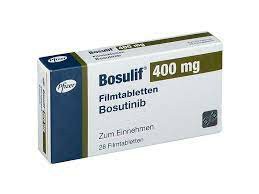
In long-term follow-up, bosutinib continues to be more effective than imatinib. Five-year follow-up data showed that the cumulative MMR in the bosutinib group was 73.9%, while that in the imatinib group was 64.6%. In addition, the incidence of profound molecular responses (such as MR^4 and MR^4.5) was also higher in the bosutinib group than in the imatinib group. These results further support the superiority of bosutinib in long-term treatment.
In differentSokal risk score subgroups, the efficacy advantage of bosutinib is still obvious. Especially among high-risk patients, the MMR was 34.0% in the bosutinib group and 16.7% in the imatinib group. This suggests that bosutinib may have a better therapeutic effect in high-risk patients.
In terms of safety, the overall adverse event rates of bosutinib and imatinib are similar, but the specific types of adverse events are different. In the bosutinib group, the most common adverse events included diarrhea (70%), nausea (35%), and thrombocytopenia (35%). In the imatinib group, muscle cramps (26%) and neutropenia (21%) were more common. Although the incidence of liver enzyme elevations was higher in the bosutinib group, most were reversible and effectively managed with dose adjustment.
In terms of treatment interruption and dose adjustment, the treatment interruption rate in the bosutinib group was 22.0%, which was lower than the 26.8% in the imatinib group. This may be related to the more effective management of adverse events in the bosutinib group. In addition, the dose adjustment rate in the bosutinib group was also lower than that in the imatinib group, further supporting its good tolerability.
Overall, bosutinib demonstrated higher molecular response rates, faster response rates, and good tolerability in the treatment of newly diagnosed chronic-phase CML patients. These advantages make it a strong choice for first-line treatment. However, treatment selection should take into account the patient's specific circumstances, including factors such as risk score, comorbidities, and individual tolerability. In clinical practice, individualized treatment remains the key to improving efficacy and prognosis.
Reference materials:https://go.drugbank.com/drugs/DB06616
[ 免责声明 ] 本页面内容来自公开渠道(如FDA官网、Drugs官网、原研药厂官网等),仅供持有医疗专业资质的人员用于医学药学研究参考,不构成任何治疗建议或药品推荐。所涉药品可能未在中国大陆获批上市,不适用于中国境内销售和使用。如需治疗,请咨询正规医疗机构。本站不提供药品销售或代购服务。


