
.jpeg)
What are the alternatives to trientine for the treatment of drug-resistant hepatolenticular degeneration?
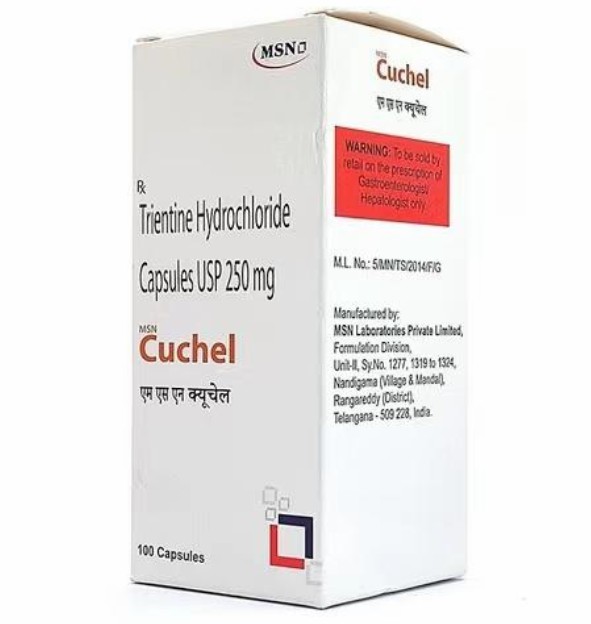
Trientine(Trientine) is a first-line copper chelator for the treatment of hepatolenticular degeneration (Wilson's disease). It is widely used in clinical practice because of its milder side effects than D-penicillamine. It is especially commonly used in patients who are intolerant to D-penicillamine or have severe side effects. However, not all patients respond well to trientine, and some people may suffer from poor efficacy or drug resistance, so it is important to find alternative treatment options.
First, D-Penicillamine remains an important alternative to trientine. Although there are many side effects, its powerful copper chelating ability still has an irreplaceable clinical position in patients with high copper load at the beginning of treatment. Patients who tolerate the side effects well can try again under close monitoring.
Secondly, zinc preparations (such as zinc sulfate) are a type of drugs that block copper absorption. Their mechanism of action is different from that of copper chelators. They reduce intestinal absorption of copper by inducing the expression of intestinal metallothionein. Zinc preparations are more suitable for maintenance treatment or patients who are intolerant to copper chelators, especially for asymptomatic gene carriers, pediatric patients and treatment during pregnancy.
In addition, a new generation of copper chelating drugs such as ammonium tetrathiomolybdate (Tetrathiomolybdate, TM) has also received attention. The drug has the ability to rapidly stabilize serum free copper levels and is particularly suitable for patients with severe neurological symptoms. Although it is not yet widely available on the market, it is in the clinical use stage in some parts of Europe and the United States.
In short, for patients with trientine-resistant Wilson's disease, alternative options need to be comprehensively evaluated based on factors such as individual condition, tolerance, copper load, and whether there are neurological symptoms, and an individualized treatment plan should be formulated under the guidance of a professional physician to ensure long-term disease control and stability of copper metabolism.
Reference materials:https://www.cufence.com/
[ 免责声明 ] 本页面内容来自公开渠道(如FDA官网、Drugs官网、原研药厂官网等),仅供持有医疗专业资质的人员用于医学药学研究参考,不构成任何治疗建议或药品推荐。所涉药品可能未在中国大陆获批上市,不适用于中国境内销售和使用。如需治疗,请咨询正规医疗机构。本站不提供药品销售或代购服务。


