
.jpeg)
What is the difference between Adagrasib and Sotoprasib?
Adagrasib () and sotorasib (Sotorasib) are both targeted drugs targeting the KRAS G12C mutation and are specifically used to treat patients with non-small cell lung cancer (NSCLC) who carry this mutation. KRASgene mutations are important drivers of many cancers, among which G12C mutations are particularly common in lung cancer patients. With the development of precision medicine, the emergence of these two drugs provides new treatment options for such patients. However, although both target KRAS G12C, there are certain differences in molecular structure, pharmacokinetic properties, clinical efficacy, side effects and scope of indications. The following will analyze in detail the differences between Adagrasib and Sotorasib in multiple dimensions.
First, there are differences in molecular mechanisms and structures. Both adagrasiib and sotorasiib irreversibly bind to the G12C site of KRAS protein, keeping it in an inactive GDP binding state, thereby inhibiting KRAS-mediated signaling pathways and blocking cancer cell proliferation. However, the molecular structures of the two are different, which leads to differences in pharmacokinetics and pharmacodynamics. The chemical structure of adagrasiib is designed to have a longer half-life and can maintain a more stable blood concentration, while sotoracib has a relatively short half-life and requires more frequent administration. In addition, adagrasib shows strong brain penetration, which gives it a potential advantage in treating patients with brain metastases.
Secondly, comparison of clinical efficacy and indications. Sotoracib is the world's first KRAS G12C inhibitor approved for marketing. With its significant objective response rate (ORR) and progression-free survival (PFS) data, it has quickly become the standard treatment option for this indication. As a subsequently approved drug, clinical trials have shown that adagrasiib has an ORR that is similar to that of sotorasibu and even performs better in some studies, especially in patients with brain metastases. The activity of adagrasib in targeting central nervous system lesions opens up more clinical application scenarios for it. In addition, the approval of adagrasib also covers some uncovered patient groups, providing more treatment options.
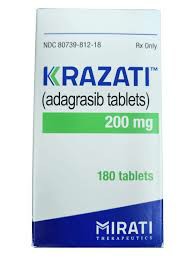
Third, in terms of safety and tolerability, both may cause common adverse reactions including diarrhea, nausea, abnormal liver function, etc., but the specific incidence and severity are different. Sotoracib has a clear side effect spectrum and is well tolerated in long-term use. Although the types of side effects of adagrasib are similar, there are reports in clinical application that the incidence of some adverse reactions is slightly higher, especially in terms of gastrointestinal reactions. Therefore, when selecting drugs, clinicians need to weigh the patient's specific conditions and rationally adjust the dosage and treatment plan.
Fourth, the method of administration and convenience are also one of the differences between the two. Sotorracib is usually taken orally once a day, making it easier for patients to take it as directed by their doctor, while adagrasiib may need to be administered twice a day to maintain a stable blood concentration, which affects the patient's medication compliance to a certain extent. In addition, there are differences in dosage adjustments and drug interactions between the two drugs. Clinically, appropriate options should be selected based on the patient's medication history, concomitant medications, and liver and kidney function status.
Finally, in terms of market and accessibility, as a first-to-market drug, sotorasibu has been commercialized in many countries and regions, and medical insurance coverage and patient access are relatively convenient. Although adagrasib was launched later, it quickly gained market recognition due to its efficacy and safety advantages. In the future, with the accumulation of more clinical data and drug promotion, patients' choices between the two will become more diverse.
In summary, as two targeted drugs targeting KRAS G12C mutations, adagrasiib and sotorasiib have similar therapeutic targets and mechanisms, but there are many differences in molecular structure, clinical manifestations, pharmacokinetics, administration methods and side effect management. Clinicians should rationally select appropriate targeted drugs based on the patient's specific condition, tumor characteristics and individual tolerance, and strive to achieve the best therapeutic effect. At the same time, with the continuous deepening of scientific research, the combination or sequential treatment strategy of these two drugs in the future is expected to further improve the survival benefit of KRAS mutated lung cancer patients.
References:https://www.krazati.com/
xa0
[ 免责声明 ] 本页面内容来自公开渠道(如FDA官网、Drugs官网、原研药厂官网等),仅供持有医疗专业资质的人员用于医学药学研究参考,不构成任何治疗建议或药品推荐。所涉药品可能未在中国大陆获批上市,不适用于中国境内销售和使用。如需治疗,请咨询正规医疗机构。本站不提供药品销售或代购服务。


