
.jpeg)
What is the difference between bimetinib/bemetinib and trametinib?
Binimetinib and Trametinib are oral anticancer drugs targeting MEK1/2 kinase and are widely used in the treatment of malignant tumors related to BRAF mutations. Although they belong to the same category of MEK inhibitors, they have significant differences in molecular structure, indications, pharmacodynamic characteristics and safety. The following will conduct a detailed comparison of these two drugs from multiple dimensions to help clinicians and patients better understand their similarities and differences.
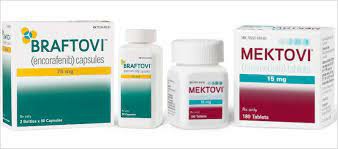
First of all, from the perspective of drug source and development background, bimetinib was developed by Array BioPharma under the trade name Mektovi. It was initially used to treat unresectable or metastatic melanoma carrying BRAF V600E or V600K mutations and was approved by the FDA in 2018. In recent years, its indications have been expanded to BRAF V600E mutated non-small cell lung cancer (NSCLC). In contrast, trametinib was developed by GlaxoSmithKline (GSK) under the trade name Mekinist. It was approved by the FDA in 2013 for the treatment of metastatic melanoma with BRAF V600E or V600K mutations, and has shown potential for broader indications in subsequent studies.
In terms of pharmacological mechanisms, both are non-ATP-competitive MEK1/2 inhibitors that block tumor cell proliferation and survival by inhibiting the MAPK/ERK signaling pathway. However, trametinib has stronger inhibitory activity against MEK1/2 in in vitro experiments, with IC50 values u200bu200bas low as 0.7–0.9 nM, showing higher affinity and selectivity. The IC50 value of bimetinib is approximately 12 nM, which although slightly higher, still has good inhibitory effect.
In terms of clinical efficacy, trametinib has shown excellent efficacy in multiple clinical trials. For example, in a phase III clinical trial of patients with BRAF V600-mutant melanoma, the median progression-free survival (PFS) of trametinib was 4.8 months, which was significantly better than the 1.5 months in the control group. In addition, the combined use of trametinib and dabrafenib further improved the therapeutic effect and prolonged the overall survival of patients. Bimetinib has also shown certain efficacy in the treatment of NRAS-mutated melanoma patients. In the NEMO study, the median PFS was 2.8 months, which was better than the 1.5 months in the control group.
There are differences in the side effect profiles between the two in terms of safety and tolerability. Common adverse reactions of trametinib include rash, diarrhea, fatigue and peripheral edema, and some patients may experience cardiac-related events, such as decreased left ventricular ejection fraction. Adverse reactions of bimetinib include rash, nausea, vomiting, diarrhea, and peripheral edema, and some patients may experience ocular toxicities, such as blurred vision and reversible chorioretinopathy. In terms of dose adjustment, the recommended dose of trametinib is 2 mg once daily, while the recommended dose of bimetinib is 45 mg twice daily.
In terms of combination therapy, the combination of trametinib and the BRAF inhibitor dabrafenib has become the standard regimen for the treatment of BRAF V600 mutant melanoma. Bimetinib is often used in combination with encorafenib to treat BRAF V600-mutated melanoma and non-small cell lung cancer. Both combination regimens showed synergistic effects, improved treatment effects and prolonged patient survival.
In terms of indications, trametinib has a wider range of indications, including melanoma, thyroid cancer, non-small cell lung cancer and other tumorsBRAF mutation-related tumors. The indications of bimetinib are relatively narrow, mainly focusing on melanoma and non-small cell lung cancer.
Reference materials:https://go.drugbank.com/drugs/DB11967
[ 免责声明 ] 本页面内容来自公开渠道(如FDA官网、Drugs官网、原研药厂官网等),仅供持有医疗专业资质的人员用于医学药学研究参考,不构成任何治疗建议或药品推荐。所涉药品可能未在中国大陆获批上市,不适用于中国境内销售和使用。如需治疗,请咨询正规医疗机构。本站不提供药品销售或代购服务。


