
.jpeg)
Introduction to the pharmacological effects and indications of bosutinib/bosutinib
1. Pharmacological mechanism of action of bosutinib
Bosutinib is an oral tyrosine kinase inhibitor (TKI) that mainly exerts anti-tumor effects through the following mechanisms:
1. Targeting BCR-ABL fusion protein
The BCR-ABL fusion gene is the pathogenic core of chronic myelogenous leukemia (CML). The encoded tyrosine kinase has sustained activity, leading to abnormal proliferation of leukemia cells. Bosutinib inhibits the growth and division of leukemia cells by competitively inhibiting the ATP binding site of BCR-ABL kinase and blocking its downstream signaling pathways.
2. Inhibit SRC family kinases
In addition toBCR-ABL, bosutinib also inhibits SRC family kinases, including Src, Lyn and Hck. These kinases play important roles in cell signaling, proliferation, and survival, and their abnormal activities are closely related to the occurrence and development of various tumors. By simultaneously inhibiting SRC kinase, bosutinib can more comprehensively intervene in the survival mechanism of tumor cells and improve the therapeutic effect.
3. Effectiveness against multiple drug-resistant mutations
Bosutinib has an inhibitory effect on a variety of imatinib-resistant BCR-ABL mutations, such as Y253H, E255K, F359V, etc. However, the inhibitory effect of bosutinib is poor for T315I and V299L mutations. These mutations are located in critical regions of the kinase structure, making it difficult for the drug to bind effectively, leading to drug resistance.
4. Pharmacokinetic properties
Absorption and Distribution: Bosutinib is well absorbed after oral administration, and plasma concentrations increase linearly with increasing dose.
Metabolism: Mainly metabolized by the liver's CYP3A4 enzyme, and the metabolites generated are less active.
Excretion: Mainly through feces and a small amount through urine.
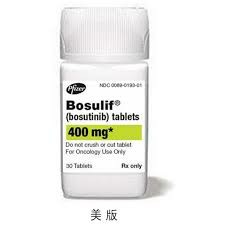
2. Indications of bosutinib
Bosutinib is approved to treat patients with the following types of Philadelphia chromosome-positive (Ph+) chronic myelogenous leukemia (CML):
1. Newly diagnosed chronic phase Ph+ CML adults and pediatric patients 1 year old and above
Bosutinib can be used as a first-line treatment for newly diagnosed patients with chronic-phase CMLPh+ CML. By inhibiting BCR-ABL kinase activity, it effectively controls disease progression and improves patient survival rate.
2. Adult and pediatric patients with chronic phase Ph+ CML who have developed resistance or intolerance to previous treatment
Bosutinib provides a new treatment option for patients who develop drug resistance or adverse reactions after receiving TKI treatment such as imatinib, nilotinib or dasatinib It has an inhibitory effect on multiple drug-resistant mutant BCR-ABL kinases and can continue to control the disease after initial treatment failure.
3. Adult patients with accelerated phase or blast phase Ph+ CML who have developed resistance or intolerance to previous treatment.
After CML progresses to the accelerated or blast phase, treatment becomes more difficult. Bosutinib still shows a certain efficacy at this stage, especially when previous treatments are ineffective, providing patients with new treatment hope.
3. Bosutinib usage and dosage
The dose of bosutinib should be adjusted according to the patient's specific condition. The following is the recommended initial dose:
Newly diagnosed chronic phasePh+CML adult patients: 400mg, orally, once a day, with food. Adult patients with chronic-phase, accelerated-phase, or blast-phase Ph+ CML who have developed resistance or intolerance to previous therapy: 500 mg orally once daily with food.
Newly diagnosed chronic phaseChildren with Ph+CML: 300mg/m², orally, once a day, with food. Pediatric patients with chronic phase Ph+CML who have developed resistance or intolerance to previous treatment: 400 mg/m², orally, once daily with food.
For patients who do not achieve a complete hematologic, cytogenetic, or molecular response and who do not have Grade 3 or higher adverse reactions, consider escalating the dose to 100 mg once daily to a maximum of 600 mg daily.
Adjust dosage based on toxicity and organ damage. For pediatric patients who have not achieved adequate response after 3 months, if the body surface area (BSA) is <1.1m², consider a dose increase of 50 mg; if BSA ≥ 1.1m², consider a dose increase of 100 mg; the maximum daily dose is 600 mg.
4. Clinical advantages of bosutinib
1. Multi-target mechanism of action: Bosutinib not only inhibits BCR-ABL kinase, but also inhibits SRC family kinases, which can more comprehensively interfere with the survival mechanism of leukemia cells and improve the therapeutic effect.
2. Effectiveness against multiple drug-resistant mutations: Bosutinib has an inhibitory effect on multiple imatinib-resistant BCR-ABL mutations, providing a new treatment option for patients who failed previous treatments.
3. Good tolerance: Clinical studies have shown that the side effects of bosutinib are relatively controllable, mainly including gastrointestinal reactions and mild liver function abnormalities, and it is well tolerated by patients.
5. Summary
Bosutinib, as a multi-target tyrosine kinase inhibitor, has shown significant efficacy in the treatment of Philadelphia chromosome-positive chronic myelogenous leukemia, especially for newly diagnosed patients and patients who have developed resistance or intolerance to previous treatments. Its unique mechanism of action and good tolerability make it an important drug choice in the treatment of CML.
Reference materials:https://go.drugbank.com/drugs/DB06616
[ 免责声明 ] 本页面内容来自公开渠道(如FDA官网、Drugs官网、原研药厂官网等),仅供持有医疗专业资质的人员用于医学药学研究参考,不构成任何治疗建议或药品推荐。所涉药品可能未在中国大陆获批上市,不适用于中国境内销售和使用。如需治疗,请咨询正规医疗机构。本站不提供药品销售或代购服务。


