
.jpeg)
What is the basic information on selumetinib drug instructions?
Selumetinib is an emerging targeted therapy drug that has received widespread attention in recent years for its efficacy in the treatment of a rare genetic disease - Neurofibromatosis Type 1 (NF1). As a MEK1/2 inhibitor developed by Array BioPharma (later acquired by Pfizer) and later led by AstraZeneca (AstraZeneca) in global marketing, it has brought new hope to some children with neurofibromatosis that is difficult to treat with surgery. The following will provide an in-depth introduction to the basic drug description information of selumetinib from multiple aspects to help patients and medical staff understand its mechanism and usage principles more systematically.
1. Drug name and alias
Selumetinib has various nomenclatures. The following names all refer to the same drug entity but are used differently in clinical, regulatory, academic and commercial settings:
Common name (international nonproprietary name):Selumetinib
Chinese name: selumetinib
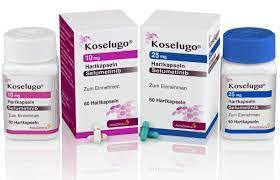
Commodity name:KOSELUGO (English), KOSELUGO (Chinese)
Chemical name: selumetinib hydrogen sulfate capsule or selumetinib sulfate
2. Indications
The main indication for selumetinib focuses on a rare genetic disease:
Main indications: TreatmentPediatric patients 2 years of age and older with neurofibromatosis type 1 (NF1) and symptomatic, inoperable plexiform neurofibromas (PN).
NF1 is an autosomal dominant disease caused by mutations in the NF1 gene. Patients may develop skin spots, skeletal deformities, and benign tumors of the peripheral nervous system (ie, PN). Although PN is benign, it is difficult to surgically remove because it grows deeply and often surrounds nerves or blood vessels. It can easily cause pain, dysfunction, and even affect development and quality of life. The targeting mechanism of selumetinib brings a new pharmacological pathway to the treatment of NF1-related PN, which has important clinical significance.
3. Pharmacological mechanism
Selumetinib is a selective small moleculeMEK inhibitor that targets the MEK1/2 protein in the MAPK/ERK signaling pathway. This signaling pathway is closely related to cell proliferation, differentiation, and survival, and the activity of this pathway is often abnormally upregulated in patients with NF1 mutations, leading to the continued growth of tumor lesions such as schwannoma.
By inhibitingMEK activity, selumetinib can indirectly control the growth process of PN tumors, reduce symptoms, improve function and potentially inhibit tumor volume expansion. The precise targeting of this mechanism also reduces the impact on normal tissues and improves the controllability of treatment.
4. Usage and dosage
The dosage design of selumetinib is extremely precise and is mainly based on the calculation of the patient's body surface area (Body Surface Area, BSA). The following are the recommended dosages for different BSA ranges (oral, twice in the morning and evening):
0.55-0.69 m²: 20mg in the morning and 10mg in the evening
0.70-0.89 m²: 20mg twice daily
0.90-1.09 m²: 25mg twice daily
1.10-1.29 m²: 30mg twice daily
1.30-1.49 m²: 35mg twice daily
1.50-1.69 m²: 40mg twice daily
1.70-1.89 m²: 45mg twice daily
≥1.90 m²: 50mg twice daily
There are also special requirements for the method of taking the drug: selumetinib must be taken orally on an empty stomach, that is, at least2 hours before each dose and no food for at least 1 hour after taking the drug to ensure maximum drug absorption and reduce gastrointestinal discomfort.
Currently there are no clear dosage recommendations for children whose body surface area is less than0.55 m². Medication for this group of people needs to be formulated by a professional physician based on individual assessment and individual circumstances.
5. Adverse reactions and precautions
Although selumetinib has strong targeting, certain adverse reactions may still occur during use, including but not limited to rash, diarrhea, fatigue, blurred vision, and elevated liver enzymes. In individual cases, cardiac function effects or retinopathy may occur. Therefore, during use you need to:
Regular monitoring of liver and kidney function and eye examinations;
Strictly follow the dosage and frequency prescribed by your doctor;
If severe discomfort occurs, stop taking the medication immediately and seek medical treatment.
The patient's family should closely observe the clinical changes after taking the medication, especially the behavioral and physical changes in children's response to the medication, to ensure the safety of treatment.
Reference materials:https://www.koselugo.com
[ 免责声明 ] 本页面内容来自公开渠道(如FDA官网、Drugs官网、原研药厂官网等),仅供持有医疗专业资质的人员用于医学药学研究参考,不构成任何治疗建议或药品推荐。所涉药品可能未在中国大陆获批上市,不适用于中国境内销售和使用。如需治疗,请咨询正规医疗机构。本站不提供药品销售或代购服务。


