
.jpeg)
Quizartinib plus chemotherapy to be evaluated in phase 3 trial in FLT3-ITD-negative AML
Based on encouraging data from the Phase 2QUIWI trial (NCT04107727), researchers will examine the FLT3 inhibitor quizartinib (Quizartinib) combined with chemotherapy to treat patients with newly diagnosed FLT3-ITD negativeacute myeloid leukemia (AML).
The addition of FLT3 inhibitors to intensive chemotherapyFLT3 inhibitors can improve the survival rate of AML patients carrying FLT3-ITD or -TKD mutations. The FLT3 receptor also plays an important role in normal hematopoiesis. When FLT3 ligand binds to the extracellular domain of the FLT3 receptor, it causes dimerization of the receptor and activation of intracellular tyrosine kinases, [initiating] a cascade of events that leads to the survival and proliferation of these cells. AML cells express the FLT3 receptor, and activation of this receptor enhances leukemia survival and proliferation. Preclinical data suggest that expression of FLT3 on the surface of blast cells and the level of FLT3 ligand may be related to the prognosis of AML. "
In July 2023, the FDA approved the use of quizartinib with standard cytarabine and anthracycline induction and cytarabine consolidation, as well as maintenance monotherapy after consolidation chemotherapy, for the treatment of patients with newly diagnosed AML who are positive for FLT3-ITD. Approval was based on data from the Phase 3 QuANTUM First trial (NCT02668653). The trial showed that patients who received quizartinib had a statistically significant and clinically meaningful improvement in overall survival (OS) compared with those who received chemotherapy plus placebo (HR, 0.78; 95% CI, 0.62-0.98; two-sided P=0.0324). However, accumulating data suggest that FLT3 inhibitors may have a greater effect than initially hypothesized.
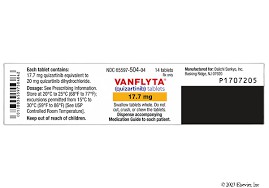
QUIWI evaluated quizartinib plus chemotherapy in patients aged 18 to 70 years with newly diagnosed FLT3-ITD-negative AML. Three patients were randomly assigned 2:1 to receive quizartinib or placebo, all combined with 7+3 chemotherapy. The primary endpoint is event-free survival (EFS), and OS is a key secondary endpoint. The final results of QUIWI submitted in 2024 show that for patients receiving Quizartinib(n=180), the risk of EFS events was reduced by 28% (n=93; HR, 0.72; 95% CI, 0.53-1.0; two-sided P=0.0455). The 1-year, 2-year, 3-year, and 4-year EFS rates of patients in the quizartinib group were higher than those in the placebo group, 58.3% vs. 47.3%, 49.2% vs. 36.6%, 44.6% vs. 32.1%, and 44.6% vs. 32.1%, respectively.
The risk of death was also reduced by 37% in the quizartinib group compared with the placebo group (HR, 0.63; 95% CI, 0.44-0.91; two-sided P=0.0121). The 4-year OS rates of quizartinib and placebo were 57.1% and 44.3%, respectively. The complete remission (CR)/CR incomplete count recovery (CRi) rates after 2 cycles were 77.2% and 76.3% respectively.
Previous findings from the 2023 QUIWI subgroup analysis showed that patients with an FLT3-like genetic signature (n=80) had an increased risk of EFS (HR, 0.45; 95% CI, 0.25-0.82; P=0.009), O S (HR, 0.41; 95% CI, 0.20-0.84; P = 0.01) and recurrence-free survival (RFS; HR, 0.37; 95% CI, 0.18-0.79; P = 0.01). Among patients without the FLT3-like genetic signature, there was no significant difference in total deaths, EFS, RFS or OS between the two groups.
Safety data from QUIWI showed that seven patients died during the first induction cycle in the quizartinib group compared with five in the placebo group. Three patients received allogeneic stem cell transplantation after first CR/CRi, 32.2% and 30.1% in the quizartinib and placebo groups, respectively.
The most common any-grade adverse reactions (AEs) with quizartinib included febrile neutropenia (81%), rash (63%), and diarrhea (56%). In the placebo group, common any-grade AEs included febrile neutropenia (78%), rash (60%), and mucositis (47%). There was no difference in early mortality between the two groups of patients, including those over 60 years old.
References:https://www.onclive.com/view/quizartinib-plus-chemotherapy-is-set-to-be-evaluated-in-flt3-itd-negative-aml-in-phase-3-trial
[ 免责声明 ] 本页面内容来自公开渠道(如FDA官网、Drugs官网、原研药厂官网等),仅供持有医疗专业资质的人员用于医学药学研究参考,不构成任何治疗建议或药品推荐。所涉药品可能未在中国大陆获批上市,不适用于中国境内销售和使用。如需治疗,请咨询正规医疗机构。本站不提供药品销售或代购服务。


