
.jpeg)
Strategic and safe use of lorlatinib/lorlatinib is key to optimizing the management of ALK+ non-small cell lung cancer
Lorlatinib has become the first-line standard of care for patients with ALK-positive non-small cell lung cancer (NSCLC) as long-term follow-up data highlight the importance of exposing patients to the potential benefits of this agent early in the treatment sequence rather than after other ALK inhibitors have been used. Taking a targeted, patient-centered approach to predicting and mitigatinglorlatinib-related toxicities.
The phase 3 CROWN trial (NCT03052608) compared lorlatinib with crizotinib (Xalkori) in patients with previously untreated, advanced, ALK-positive NSCLC receiving systemic therapy. Research results presented at the 2024 ASCO Annual Meeting showed that patients who received lorlatinib (n=149) had a median follow-up of 60.2 months, and patients who received crizotinib (n=147) had a median follow-up of 55.1 months. The median progression-free survival (PFS) has not yet been reached (NR; 95% CI, 64.3 months NR) vs. 9.1 months (95% CI, 7.4-10.9) (HR, 0.19; 95% CI, 0.13-0.27).
In addition,The phase 1/2 B7461001 trial (NCT01970865) demonstrated the efficacy of lorlatinib in patients with ALK-positive metastatic non-small cell lung cancer who had previously received at least 1 ALK inhibitor. 2 Exploratory subgroup analysis of this trial showed that patients who had previously received crizotinib and at least 1 other ALK inhibitor (n=119), alectinib (Alecensa; n=13), or ceritinib
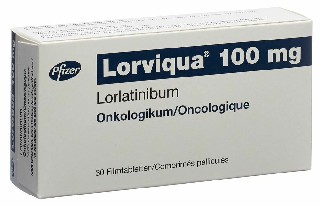 .
.
Discussed how the management of ALK-positive NSCLC is changing based on 5-year follow-up data from CROWN; lorlatinib dosing regimens that may increase tolerance to the drug in some patients; and how biomarker testing results should raise further questions about individualized disease management.
At the 2024 ASCO Annual Meeting, the 5-year follow-up of the CROWN study was presented. CROWN studied lorlatinib versus crizotinib in first-line patients with ALK-positive advanced disease. The data [from CROWN] have been out for a few years, but the importance of the 5-year data is that [they] show that the duration of benefit of starting with lorlatinib is much longer than starting with a different ALK inhibitor and then [switching to] in the second lineLorlatinib] duration of benefit obtained.
However,[these data] took 5 years to mature because we had to see the [PFS] curve keep rising, and it did. After 5 years, [patients who started taking lorlatinib] had not yet reached median PFS.
Lorlatinibwas the "best" available ALK inhibitor to start. However, the reason it took 5 years to change [practice] is because lorlatinib is not necessarily an easy drug to tolerate; there are many adverse effects. About 80% of patients will have to continue receiving cholesterol or triglyceride-lowering drugs, or both.
There are many otherAEs neurological AEs, mood-related AEs, sleep-related AEs and speech-related AEs. In clinical trials [with lorlatinib], [neurocognitive adverse events] that we probably didn't know to look out for, the incidence of [these AEs] was about 20%. As a rule of thumb, these adverse events tend to develop relatively early within the first few months [of treatment].
Reference materials:https://www.onclive.com/view/strategic-and-safe-lorlatinib-use-is-key-to-optimal-alk-nsclc-management
[ 免责声明 ] 本页面内容来自公开渠道(如FDA官网、Drugs官网、原研药厂官网等),仅供持有医疗专业资质的人员用于医学药学研究参考,不构成任何治疗建议或药品推荐。所涉药品可能未在中国大陆获批上市,不适用于中国境内销售和使用。如需治疗,请咨询正规医疗机构。本站不提供药品销售或代购服务。


