
.jpeg)
What are the advantages and applicable populations of dasatinib compared with imatinib?
Dasatinib and Imatinib are both important drugs for the targeted treatment of chronic myelogenous leukemia (CML). They are both tyrosine kinase inhibitors (TKIs) and block the proliferation of leukemia cells by inhibiting the activity of BCR-ABL fusion proteins. However, there are significant differences between the two in terms of molecular structure, target spectrum, clinical application characteristics, and adaptability to specific patient groups. With the continuous advancement of targeted therapy strategies, clinical understanding of the advantages, disadvantages, and individual adaptability of dasatinib and imatinib has gradually deepened. Especially in dealing with patients with drug-resistant mutations, accelerated phase CML, or patients with high-risk characteristics, dasatinib has shown unique therapeutic advantages.
First of all, from the perspective of its mechanism of action, imatinib is a first-generation TKI that specifically binds to the ATP-binding site of BCR-ABL kinase to prevent its signal transduction, while dasatinib, as a second-generation TKI, has a broader spectrum of kinase inhibitory capabilities. Dasatinib not only has a strong inhibitory effect on BCR-ABL activity, but can also act on other signaling pathways such as SRC family kinases. This multi-target mechanism allows it to still exert an inhibitory effect in the face of certain imatinib-resistant mutations, especially in multiple mutation types other than T315I, showing better inhibitory ability.
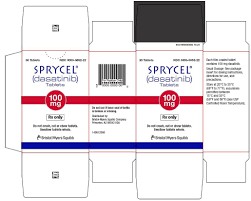
Therefore, dasatinib is often used as the preferred second-line treatment for patients who develop resistance or disease progression during imatinib treatment. In addition, dasatinib has a stronger penetrating ability, especially in terms of central nervous system penetration than imatinib, and may provide better protection for patients with rare CNS leukemias.
In terms of clinically applicable population, imatinib is suitable for patients in the chronic phase of CML who are initially treated. Its side effects spectrum is relatively mild, and it can be maintained as a long-term treatment in most patients who tolerate it well. However, for patients with high Sokal scores, high ELTS risk scores, or patients whose disease enters the accelerated phase or even the blast phase, the rapid onset of action of dasatinib is more clinically valuable. Studies have shown that dasatinib can induce deep molecular responses earlier, which is particularly critical to reducing the risk of long-term disease transformation. At the same time, dasatinib has a faster onset of action, and significant hematological and cytogenetic responses can usually be observed in the early stages of treatment, making it more suitable for patients who want to achieve disease control as soon as possible. In addition, dasatinib only needs to be taken once a day without food restrictions, making it more convenient for patients with poor compliance or irregular daily routines, which is especially true among young people.
In terms of safety, although both have certain side effects, the types are different. Common side effects of imatinib include edema, muscle cramps and digestive discomfort, which are usually mild and controllable, while dasatinib is more likely to cause hematological adverse reactions such as pleural effusion and thrombocytopenia. In certain elderly patients or patients with underlying cardiopulmonary disease, the risks of dasatinib use need to be carefully evaluated. Therefore, when selecting specific drugs, doctors often need to make individualized decisions based on multiple factors such as patient age, concomitant diseases, tolerance, and expected treatment goals.
Reference materials:https://go.drugbank.com/drugs/DB01254
[ 免责声明 ] 本页面内容来自公开渠道(如FDA官网、Drugs官网、原研药厂官网等),仅供持有医疗专业资质的人员用于医学药学研究参考,不构成任何治疗建议或药品推荐。所涉药品可能未在中国大陆获批上市,不适用于中国境内销售和使用。如需治疗,请咨询正规医疗机构。本站不提供药品销售或代购服务。


