
.jpeg)
JAK inhibitor baricitinib significantly restores hair growth in adolescents with alopecia areata
Results from a Phase 3 clinical trial show that adolescents with severe or very severe alopecia areata (AA) who took the Janus kinase inhibitor baricitinib (Baricitinib) daily were able to regrow hair, with some improving hair loss by 90%. Three-thirds of patients with very severe alopecia areata had a SALT (Severity of Hair Loss Tool) score below 20 at baseline, and seven of 10 patients with severe alopecia areata had a SALT score below 20 at 36 weeks. Presented Results from the Phase 3 BRAVE-AA-PEDS trial, with SALT20 scores equivalent to 80% or more scalp coverage.
The trial recruited 257 AA adolescents aged 12-18 years with a SALT score of ≥50 at screening. Patients were randomized into three groups: oral baricitinib 4 mg or 2 mg once daily, or placebo. Other key eligibility criteria were AA diagnosis one year or older, current AA episode lasting between 6 months and 8 years (mean duration 6.6 years), failure of at least one other AA treatment, and history of psychological counseling for AA. The clinical study reports 36-week results. Baricitinibis currently approved by the U.S. Food and Drug Administration for the treatment of severe AA in adults.
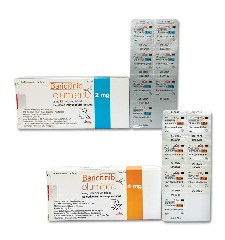
Research results
Nearly half (47%) of patients taking baricitinib 4 mg achieved a SALT score of 20 or lower, while a quarter (27.4%) of patients taking 2 mg achieved a SALT score of 20 or lower, compared with 4.5% of patients taking placebo. More than one-third (36.5%) of people taking 4 mg had a stronger reaction, as measured by a SALT score of 10 or less, compared with 21.4% of the 2 mg group and 2.3% of the placebo group. "Among adolescents taking baricitinib and placebo, SALT improvement rates were 50% and 90%, respectively, which was significantly higher than placebo.
SALT scores improved by 50% or greater in 60% of patients in the baricitinib 4-mg group, compared with 36.9% in the 2-mg group and 5.7% in the placebo group (P=0.001). One-third of those who took 4 mg had SALT improvement of 90% or better, and those in the 2mg groupThe same was true for 20.2% and 1.1% of the placebo group. The study also evaluated outcomes in patients with severe and very severe AA, defined as SALT scores of 50-94 and 95-100, respectively. Among patients with severe AA, 67.7% of patients taking 4 mg of baricitinib and 51.7% of those taking 2 mg met the primary endpoint of a SALT score of 20 or less, compared with 6.3% of those taking placebo. Among patients with very severe AA, 27.8% of those treated with 4 mg met this endpoint, compared with 14.5% of those treated with 2 mg, compared with 1.8% of those treated with placebo.
Safety results were also consistent with other trials of baricitinib. Acne was the most common treatment-related side effect, affecting 8.9% of both treatment groups and 4.5% of the placebo group. The trial was the "largest study to date" of oral baricitinib in AA, and the primary endpoint of a SALT score of 20 or less was significant. Depending on the location of the lesion, your quality of life will usually improve by the time you reach SALT20.
Baricitinib is also being evaluated for AA in patients 6 to 12 years of age. The pain of these children is much greater.
References:https://www.medscape.com/viewarticle/jak-inhibitor-baricitinib-significantly-restores-hair-growth-2025a10006gw
[ 免责声明 ] 本页面内容来自公开渠道(如FDA官网、Drugs官网、原研药厂官网等),仅供持有医疗专业资质的人员用于医学药学研究参考,不构成任何治疗建议或药品推荐。所涉药品可能未在中国大陆获批上市,不适用于中国境内销售和使用。如需治疗,请咨询正规医疗机构。本站不提供药品销售或代购服务。


