
.jpeg)
What is the molecular structure formula of tucatinib/tucatinib?
Tucatinib is a small molecule tyrosine kinase inhibitor specifically designed to target HER2 (human epidermal growth factor receptor 2). Its molecular structure is designed to be highly selective pharmacologically. Its chemical name is N-[(1R)-1-[4-[[4-[(3,5-dimethylphenyl)carbonyl]amino]-3-methylphenyl]amino]-2-hydroxyethyl]pyridine-3-carboxamide, its molecular formula is C26H29N7O2, and its molecular weight is 471.56 g/mol. The drug's molecular structure contains multiple aromatic rings, amine groups and amide structures. These key parts give it high affinity and inhibitory effect on the HER2 tyrosine kinase domain.
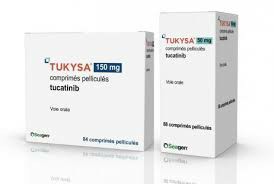
The three-dimensional structure of tucatinib is based on substituted aromatic rings in its core skeleton. These structural sites are arranged in spatial conformation to form specific binding sites withHER2 kinase domain. This high degree of selectivity is the key to distinguishing it from other HER family inhibitors (such as lapatinib, neratinib, etc.), because it can maximize the inhibition of the HER2 signaling pathway and avoid excessive effects on other receptors such as EGFR, thereby reducing adverse reactions related to skin toxicity and diarrhea.
The molecular structure of tucatinib has been optimized, allowing it to maintain stable distribution and activity within cells, as well as good blood-brain barrier penetration, making it an important choice for the treatment of patients with brain metastases from HER2-positive breast cancer. The lipophilicity and molecular stability of the drug are the structural basis for its ability to cross the central nervous system barrier. For this reason, it has demonstrated positive effects on central lesions in clinical studies.
Currently, tucatinib, as the original drug, has been approved for use in combination with trastuzumab and capecitabine for the treatment of advanced HER2-positive breast cancer, especially patients with brain metastases or progression after treatment. Its molecular structure not only demonstrates the precise strategy of modern targeted drug design, but is also a representative achievement of the combination of biomedical engineering and organic synthetic chemistry, providing a structural template for the development of more small molecule anti-cancer drugs in the future.
Reference materials:https://www.tukysa.com/
[ 免责声明 ] 本页面内容来自公开渠道(如FDA官网、Drugs官网、原研药厂官网等),仅供持有医疗专业资质的人员用于医学药学研究参考,不构成任何治疗建议或药品推荐。所涉药品可能未在中国大陆获批上市,不适用于中国境内销售和使用。如需治疗,请咨询正规医疗机构。本站不提供药品销售或代购服务。


