
.jpeg)
Neratinib/neratinib induces CNS responses in a subset of HER2+ breast cancer brain metastases
Neratinib/neratinib-based combinations demonstrated consistent central nervous system (CNS) efficacy in the treatment setting of patients with HER2-positive breast cancer and untreated/active or asymptomatic/stable brain metastases, according to the results of a published literature review.
This literature review includes prospective clinical trials that reported Stage 2 TBCRC CNS-specific data from the neratinib-based combination regimen in patients with HER2-positive breast cancer from the 022 trial (NCT01494662), which enrolled only patients with untreated or active brain metastases; and from the Phase 3 NALA (NCT01808573) and Phase 2 NEfERT-T (NCT00915018) trials that included patients with asymptomatic or stable brain metastases. Cancer brain metastases are a common site of disease recurrence and are associated with high morbidity and mortality in patients with HER2-positive metastatic cancer.
In clinical practice, neratinib in combination with other FDA-approved agents is a promising approach for the treatment of patients with brain metastases from HER2-positive breast cancer, although the optimal sequence of treatment after progression on tucatinib, fam-trastuzumab deruxtecan-nxki, and/or ado-trastuzumab emtansine has not yet been determined.
For example, a retrospective meta-analysis showed that the cumulative incidence of brain metastases in patients with HER2-positive breast cancer was 31% (interquartile range, 24.0-34.0) over a median follow-up of 30.7 months. 2 Furthermore, a real-world analysis in the United States showed that 21.5% to 36.3% of breast cancer patients with HER2-positive cancer developed brain metastases through third-line therapy for their metastatic disease. There are few FDA-approved systemic treatments specifically for brain metastases in HER2-positive breast cancer. Clinical trials explicitly designed to evaluate active CNS disease remain limited, highlighting the unmet need for novel systemic drug combinations in this setting.
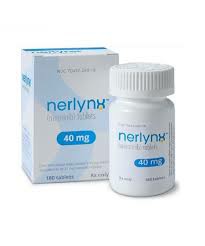
Irreversible full-HER TKI neratinib is FDA-approved as monotherapy for the extended adjuvant treatment of adult patients with early-stage HER2-positive breast cancer and in combination with capecitabine for the treatment of adult patients with advanced or metastatic HER2-positive cancer who have received at least 2 anti-HER2-based treatment regimens in the metastatic setting. Of note, CNS activity of neratinib in combination with other drugs has been observed in several clinical trials.
1. Central nervous system of each trialORR results
InTBCRC 022 Cohort 4, the CNS ORR in Cohorts 4A, 4B, and 4C were 50.0%, 29.4%, and 23.8%, respectively. Cohorts 4B and 4C each experienced one complete response (CR); the remaining responses were partial responses (PR). Five additional unconfirmed PRs were observed in cohorts 4B (n = 1) and 4B (n = 4). Response estimates for neuro-oncology brain metastases (RANO-BM) ORR were 33.3%, 35.3%, and 28.6% in cohorts 4A, 4B, and 4C, respectively. One CR occurred in cohort 4B; the remaining responses were PRs. Four additional unconfirmed reactions were observed in Group 4A (n=1), Group 4B (n=1), and Group 4C (n=2).
InTBCRC 022 Cohort 3, the CNS ORR in Cohorts 3A and 3B was 48.6% and 33.3%, respectively; all CNS responses in these cohorts were PRs. The RANO-BM ORR in these cohorts was 24.3% and 16.7%, respectively. Two additional patients in cohort 3A had unconfirmed RANO-BM responses that lasted at least 4 weeks.
InNALA CNS subgroup, the CNS ORR was 26.3% in the neratinib group and 15.4% in the lapatinib group. One CR was observed in the neratinib group; all other responses were PRs. In the NEfERT-T CNS subgroup, the CNS ORR in the neratinib and trastuzumab groups were 100.0% and 33.3%, respectively. All replies are PR.
2. Other central nervous system-related endpoints in NALA and NEfERT-T
In theNALA CNS subgroup, the median CNS progression-free survival was 12.4 months in the neratinib group and 8.3 months in the lapatinib group. At 1 year of follow-up, 25.5% of patients in the neratinib group required intervention for central nervous system disease compared with 36.0% in the lapatinib group. In these corresponding groups, the 1-year cumulative incidence rates of progressive central nervous system disease were 26.2% and 41.6%, respectively.
In the NEfERT-T intention-to-treat population, the 2-year cumulative incidence of progressive central nervous system disease was 10.0% in the neratinib group and 20.2% in the trastuzumab group.
3. The impact of previous treatment onTBCRC 022 central nervous system response
Even if you have been exposed to it beforeThe intracranial activity of the neratinib-based combination persisted in patients with TKIs or previous exposure to an antibody-drug conjugate [T-DM1] used in combination with neratinib. In TBCRC 022 Cohort 4C, among patients with prior T-DM1 exposure who received neratinib in combination with T-DM1, best CNS response by volume criteria at data cutoff on October 31, 2023, included CR (n=1), PR (n=4), stable disease (n=9), and progressive disease (n=2).
InTBCRC 022 Cohort 3B, among previously lapatinib-exposed patients treated with neratinib plus capecitabine, four patients responded based on volume criteria.
4. Safety investigation results
Across all trials, the most common Grade 3 or higher toxicity was diarrhea, occurring in approximately 1 in 4 patients. TBCRC 022 and NALA require primary diarrhea prophylaxis in cycle 1. Grade 4 adverse reactions (AEs) of any type were rare.
Specifically, inTBCRC 022 Cohort 4, 22.7% of patients reported grade 3 diarrhea; no grade 4 diarrhea was observed. Patients in this cohort received loperamide and colestipol prophylaxis in cycle 1. Overall, adverse events of any grade that occurred in more than 10% of patients in Cohort 4 included diarrhea, fatigue, increased aspartate aminotransferase levels, nausea, increased alanine aminotransferase levels, anorexia, and decreased platelet counts.
The most common reasons for treatment-related discontinuation in this cohort were central nervous system progression or relapse (n=26) and toxicity (n=5). No treatment-induced deaths were reported in this cohort. In clinical practice, diarrhea is now commonly treated with neratinib dose escalation or antidiarrheal prophylaxis, which begins in cycle 1 and continues through cycle 2. However, these strategies have not yet been formally explored in patients treated with neratinib plus T-DM1.
Reference materials:https://www.onclive.com/view/neratinib-generates-cns-responses-across-her2-breast-cancer-brain-metastases-subgroups
[ 免责声明 ] 本页面内容来自公开渠道(如FDA官网、Drugs官网、原研药厂官网等),仅供持有医疗专业资质的人员用于医学药学研究参考,不构成任何治疗建议或药品推荐。所涉药品可能未在中国大陆获批上市,不适用于中国境内销售和使用。如需治疗,请咨询正规医疗机构。本站不提供药品销售或代购服务。


