
.jpeg)
What is the difference between Retifanlimab (Zynyz) plus chemotherapy and monotherapy?
Retifanlimab (trade name Zynyz), as an immune checkpoint inhibitor, has demonstrated significant efficacy in the treatment of anal canal squamous cell carcinoma (SCAC) in recent years. The drug can be used in combination with chemotherapy drugs or as a monotherapy to provide personalized treatment options for different patients. Understanding the differences between Retifanlimab combination chemotherapy and monotherapy can help patients and doctors better formulate reasonable treatment strategies.
First of all, Retifanlimab combined with chemotherapy is mainly suitable for patients with initially treated unresectable locally recurrent or metastatic anal squamous cell carcinoma. In this regimen, Retifanlimab is combined with two classic chemotherapy drugs, carboplatin and paclitaxel. Carboplatin and paclitaxel are cytotoxic drugs that directly kill cancer cells, while Retifanlimab relieves the suppression of the immune system by tumor cells and activates the patient's own immune cells to attack cancer cells. The advantage of combination therapy lies in the complementarity of the two mechanisms, which include the direct tumor-killing effect of traditional chemotherapy and the long-term control potential of immunotherapy. This combination significantly extended the patient's progression-free survival (PFS) and effectively controlled the patient's tumor growth.
In a study calledPOD1UM-303/InterAACT 2In a multi-center randomized double-blind clinical trial, patients who used Retifanlimab combined with carboplatin and paclitaxel had a median progression-free survival of 9.3 months, which was significantly better than those who used chemotherapy alone 7.4 months. In addition, the overall response rate (ORR) of the combination therapy also reached 56%, which was significantly higher than the 44% of the chemotherapy alone group. These data indicate that the combination regimen can bring better efficacy in the initial treatment phase, help delay disease progression, and improve patients' quality of life.
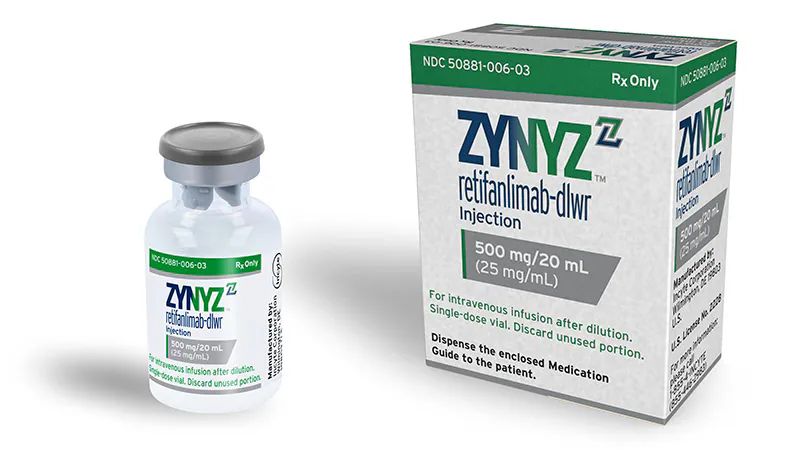
In contrast,RetifanlimabSingle-agent therapy is primarily intended for patients who have already received platinum-based chemotherapy but whose disease has progressed or who are unable to tolerate chemotherapy. For these patients, chemotherapy regimens have limited effects or have severe side effects. Retifanlimab alone as an immunotherapy method provides a new treatment option. Monotherapy can prolong the patient's survival and improve symptoms by blocking the PD-1 protein, relieving immune system suppression, and activating T cells to recognize and kill tumor cells. Clinical data shows that the overall response rate of patients treated with single drug Retifanlimab is 14%. Although it is lower than that of combination therapy, its sustained response time is longer, with the median sustained response time of approximately 9.5 months, showing good treatment tolerance and durable anti-tumor effect.
It should be noted that there are also differences in safety and side effects between combination therapy and monotherapy. Combination chemotherapy usually brings more side effects, such as nausea, hair loss, immune-related adverse reactions, etc., which require close monitoring and symptomatic treatment. The side effects of single drug Retifanlimab are relatively mild, but immune-related adverse reactions still need to be noted, including pneumonia, hepatitis and rash. Therefore, treatment selection requires a comprehensive assessment based on the patient's physical condition, previous treatment history, and tolerance.
In general, Retifanlimab combination chemotherapy and monotherapy have their own advantages and disadvantages. The combination regimen is more suitable for patients who are initially treated and whose physical condition allows them to receive chemotherapy, and can provide a higher response rate and longer progression-free survival; single-agent therapy provides another effective treatment path for patients who have failed platinum-based chemotherapy or are not suitable for chemotherapy. Doctors and patients should choose the most appropriate treatment plan based on the specific condition and tolerance to maximize the patient's survival and improve their quality of life. In the future, with the deepening of clinical research, the application scope and combination methods of Retifanlimab may be further expanded, bringing more new treatment hopes.
https://www.fda.gov/drugs/resources-information-approved-drugs
[ 免责声明 ] 本页面内容来自公开渠道(如FDA官网、Drugs官网、原研药厂官网等),仅供持有医疗专业资质的人员用于医学药学研究参考,不构成任何治疗建议或药品推荐。所涉药品可能未在中国大陆获批上市,不适用于中国境内销售和使用。如需治疗,请咨询正规医疗机构。本站不提供药品销售或代购服务。


