
.jpeg)
Instructions for use of obeticholic acid
Obeticholic acid (Obeticholic acid)trade name: Ocaliva, is an oral prescription drug used to treat primary biliary cholangitis (PBC). It has been widely used overseas and has become one of the most representative farnesoid X receptor (FXR) agonists in the field of PBC treatment. Its English generic name Obeticholic Acid indicates that the drug is a bile acid derivative with an optimized structure, which can effectively activate FXR to regulate bile production, secretion and metabolic processes in the liver and biliary tract. As a bile acid regulating drug with a unique mechanism of action, obeticholic acid has become an important alternative or complementary treatment for patients with insufficient response or intolerance to ursodeoxycholic acid (UDCA).
In terms of indications, obeticholic acid is mainly approved for the treatment of primary biliary cholangitis (PBC), an autoimmune cholestatic liver disease. The disease is characterized by chronic inflammation and destruction of small bile ducts, and without timely intervention, may develop into liver fibrosis or even cirrhosis. The specific target groups for obeticholic acid include: first, patients with PBC who have insufficient response to combined treatment with ursodeoxycholic acid are required to have no cirrhosis or are in the stage of compensated cirrhosis and do not exhibit portal hypertension; second, as a monotherapy for PBC patients who are intolerant to ursodeoxycholic acid, the same requirement is to have no cirrhosis or only compensated cirrhosis and no portal hypertension. It should be clear that obeticholic acid is not suitable for patients with decompensated cirrhosis, clinically significant portal hypertension, and severely impaired liver function.
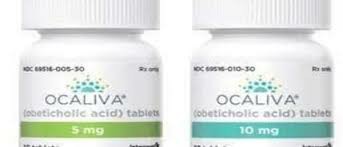
Regarding usage and dosage, obeticholic acid adopts a once-daily oral regimen, and the recommended initial dose is5 mg/day. After 3 months of continuous use, if the serum alkaline phosphatase (ALP) and/or total bilirubin levels do not reach ideal control and the patient tolerates the drug well, the dose may be considered to be increased to 10 mg daily. Clinical guidance recommends that liver function, especially ALT, AST, ALP and bilirubin, should be closely monitored when adjusting the dose to ensure a balance between efficacy and safety. For patients with mild to moderate hepatic impairment, dose adjustment should be done with caution, while obeticholic acid is usually contraindicated in patients with severe hepatic impairment.
The mechanism of action of obeticholic acid is based on its high-affinity activation ofFXR, which is widely present in liver cells and small intestinal epithelial cells. By activating FXR, obeticholic acid can regulate bile acid synthesis and efflux, reduce the accumulation of bile acids in liver cells, and thereby alleviate the toxic damage caused by cholestasis. At the same time, it can also inhibit inflammatory signaling pathways, reduce bile duct inflammation and delay disease progression. FXR activation is also closely related to the regulation of lipid metabolism, glucose metabolism, etc. Therefore, obeticholic acid has also attracted much attention in research on metabolic liver diseases.
In terms of adverse reactions, common side effects of obeticholic acid include itching (especially more obvious at higher doses), fatigue, abdominal pain, rash and joint discomfort, etc. Individual patients may experience mild elevations in ALT and AST. Therefore, it is recommended to closely follow up changes in liver function during the initial treatment period and dose adjustment period, and adjust the dosage regimen according to tolerance. Itching symptoms can be treated symptomatically with antihistamines, bile acid binders, etc. If necessary, temporary reduction in drug dosage can be considered.
It needs to be emphasized that obeticholic acid is not the drug of choice for allPBC patients. For patients with decompensated cirrhosis, jaundice or portal hypertension, this drug may increase the burden on liver function and increase the risk of liver damage. Therefore, its use must strictly follow medical advice, and laboratory testing and clinical evaluation must be carried out regularly. In addition, obeticholic acid is not recommended for use by pregnant women. There is insufficient data to prove its safety during pregnancy and lactation. Therefore, women of childbearing age should take effective contraceptive measures during use.
Reference materials:https://en.wikipedia.org/wiki/Obeticholic_acid
[ 免责声明 ] 本页面内容来自公开渠道(如FDA官网、Drugs官网、原研药厂官网等),仅供持有医疗专业资质的人员用于医学药学研究参考,不构成任何治疗建议或药品推荐。所涉药品可能未在中国大陆获批上市,不适用于中国境内销售和使用。如需治疗,请咨询正规医疗机构。本站不提供药品销售或代购服务。


