
.jpeg)
Introduction to the usage and dosage standards of evantumumab
As an antibody drug targeting the dual pathways of EGFR and MET, amivantamab's administration method is more complicated than traditional chemotherapy or single-target targeted drugs, and it needs to strictly follow body weight standards and treatment cycle requirements. The drug is mainly suitable for the treatment of patients with EGFR exon 20 insertion mutation-positive non-small cell lung cancer and can be used alone or in combination with Lazertinib. The dosage of medication also varies at different stages of treatment and the patient's weight status.
For adult patients weighing less than80 kg, the recommended dose is 1050 mg intravenously; for those weighing 80 kg and above, the dose is 1400 mg. When used as a single agent or in combination with lazetinib, it is recommended to be administered once a week for 5 weeks in the initial phase. The first week's dose is divided into two injections, administered on Days 1 and 2, to reduce possible infusion reactions caused by the first use of the drug. Starting from the seventh week, the dose is adjusted to once every two weeks, still based on weight-graded administration. This treatment model emphasizes gradual progression, stable drug release, and taking into account patient tolerance.
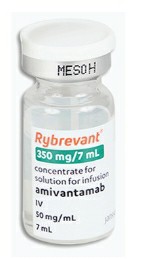
If evantuzumab is used in combination with carboplatin and pemetrexed chemotherapy, the weekly dosing frequency will be maintained for the first 4 weeks. The initial dose will also be divided into two injections in the first week. The dosage for patients under 80 kg is 1400 mg, and for patients 80 kg and above, 1750 mg. From the seventh week, the dosing frequency is extended to once every 3 weeks, and the dose is also increased simultaneously to 1750 mg and 2100 mg, depending on body weight.
Throughout the treatment process, infusion rate and adverse reaction management are also critical. When giving the first injection, monitor for allergic reactions or infusion-related side effects, and preadministration of antihistamines and antipyretics to relieve discomfort is often recommended. During subsequent injections, the infusion time can be gradually shortened and efficiency increased as long as the patient tolerates it well. In addition, based on treatment response and individual tolerance, doctors may also adjust the course of treatment or suspend medication to ensure optimal efficacy and safety.
Reference materials:https://www.rybrevant.com/
[ 免责声明 ] 本页面内容来自公开渠道(如FDA官网、Drugs官网、原研药厂官网等),仅供持有医疗专业资质的人员用于医学药学研究参考,不构成任何治疗建议或药品推荐。所涉药品可能未在中国大陆获批上市,不适用于中国境内销售和使用。如需治疗,请咨询正规医疗机构。本站不提供药品销售或代购服务。


