
.jpeg)
Subcutaneous evantumumab approved in multiple EGFR+ advanced NSCLC indications
The European Commission has approved a subcutaneous formulation of amivantamab in combination with lazertinib for the first-line treatment of patients with EGFR exon 19 deletions or exon 21 Adult patients with advanced non-small cell lung cancer (NSCLC) with an L858R substitution mutation, and as monotherapy for the treatment of adult patients with advanced NSCLC who have developed an activating EGFR exon 20 insertion mutation during or after platinum-based therapy.
Approval of the subcutaneous formulation is supported by data from the Phase 3 PALOMA-3 trial (NCT05388669). During the study, patients with EGFR-mutated advanced NSCLC who had disease progression after receiving osimertinib and platinum-based chemotherapy were randomly assigned to receive either subcutaneous evantumumab (n=206) or intravenous evantumumab (n=212).
The results of the study showed that the geometric mean ratio of the trough concentration (Ctrough) of subcutaneous injection and intravenous evantumumab was 1.15 (90% CI, 1.04-1.26) on day 1 of cycle 2 and 1.42 (90% CI, 1.27-1.61) on day 1 of cycle 4. The area under the curve for cycle 2 (AUCD1-D15) was 1.03 (90% CI, 0.98-1.09). Regarding efficacy, the overall response rate (ORR) was 30% in the subcutaneous injection group and 33% in the intravenous injection group. Median progression-free survival (PFS) was 6.1 months compared with 4.3 months for the subcutaneous and intravenous formulations, respectively. The subcutaneous formulation was also associated with improved overall survival (OS; HR, 0.62; 95% CI, 0.42-0.92; nominal P=0.02).
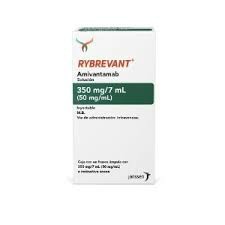
Although great progress has been made in the treatment of EGFR-mutated non-small cell lung cancer, there is still an urgent need for a treatment that is not only effective but also more convenient for patients, while optimizing the clinical experience. Approval of subcutaneous amitumumab will have a meaningful impact on clinical practice, providing greater convenience and a better treatment experience for patients without compromising the established efficacy of intravenous evantumumab. PALOMA-3 enrolled patients at least 18 years of age with locally advanced or metastatic non-small cell lung cancer harboring an EGFR exon 19 deletion or exon 21 L858R mutation who had disease progression during or after osimertinib or another approved third-generation EGFR TKI and platinum-based chemotherapy.
Patient pressPatients were randomly assigned in a 1:1 ratio to receive 1600 mg (2240 mg in patients weighing at least 80 kg) of evantumumab co-formulated with hyaluronidase subcutaneously once weekly for the first 4 weeks and every week thereafter Once every 2 weeks; or intravenous evantumumab at a dose of 1050 mg (1400 mg in patients weighing at least 80 kg) once weekly for 4 weeks, then every 2 weeks. All patients received 240 mg of lazertinib orally once daily. Inferiority of Ctrough and AUCD1-D15 was the primary endpoint of the trial. Secondary endpoints include ORR, PFS and OS.
Regarding safety, 99% of patients in both groups experienced adverse events (AEs) of any grade. The incidence of grade 3 or higher adverse events was 52% in the subcutaneous group and 56% in the intravenous group. Serious adverse events occurred in 29% and 30% of patients, respectively. In the subcutaneous group, adverse events led to 62% of patients discontinuing any treatment, 31% of patients to reduce the dose of any drug, and 13% of patients to discontinue any study treatment. In the intravenous group, these corresponding rates were 60%, 25%, and 14%, respectively.
The most common adverse events of any grade reported by at least 15% of patients in both groups were paronychia, hypoalbuminemia, rash, acneiform dermatitis, nausea, stomatitis, peripheral edema, increased alanine aminotransferase levels, decreased appetite, fatigue, vomiting, diarrhea, constipation, headache, increased aspartate aminotransferase levels, anemia, pruritus, hypocalcemia, myalgia, asthenia, thrombocytopenia, and infusion-related reactions.
Reference materials:https://www.rybrevant.com/
[ 免责声明 ] 本页面内容来自公开渠道(如FDA官网、Drugs官网、原研药厂官网等),仅供持有医疗专业资质的人员用于医学药学研究参考,不构成任何治疗建议或药品推荐。所涉药品可能未在中国大陆获批上市,不适用于中国境内销售和使用。如需治疗,请咨询正规医疗机构。本站不提供药品销售或代购服务。


