
.jpeg)
Erdafitinib drug introduction and R&D background introduction
Erdafitinib (English name Erdafitinib, trade name Balversa) is an innovative oral targeted therapy drug developed and launched by Janssen Pharmaceuticals. As an inhibitor specifically targeting fibroblast growth factor receptor (FGFR) mutations, erdafitinib plays an important role in the field of targeted therapy, especially in the treatment of urological malignancies with specific molecular mutation backgrounds.
1. Drug positioning and mechanism of action
The main mechanism of action of Erdafitinib is to inhibit multiple subtypes such asFGFR1, FGFR2, FGFR3 and FGFR4, blocking the signaling pathways activated by these receptors, thereby reducing the proliferation and survival of cancer cells. This mechanism is particularly applicable to cancer patients with FGFR2 or FGFR3 gene mutations or fusions. Since FGFR abnormalities are closely related to the growth of various solid tumors, the application of erdafitinib makes personalized precision treatment possible.
2. Overview of indications
According to the approval of the U.S. FDA, erdafitinib is suitable for the treatment of adult patients with locally advanced or metastatic urothelial carcinoma (mUC; bladder cancer ), provided that the patient's tumor has FGFR2 or FGFR3 mutations or fusions and the disease has progressed after at least one systemic therapy. In addition, before using this drug, relevant genetic changes must be confirmed through FDA-approved companion diagnostics (such as tumor tissue NGS testing). This type-based treatment strategy greatly improves treatment accuracy and efficacy.
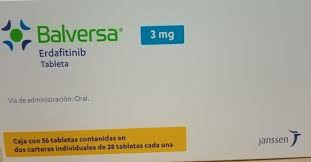
3. Usage and dosage guidance
Before officially starting erdafitinib treatment, it is recommended to complete molecular genetic testing to confirmFGFR mutation. The recommended starting dose is 8 mg daily orally. If the patient shows good tolerance after 14 to 21 days of treatment, the doctor can increase the dose to 9 mg per day based on indicators such as phosphate salt. While taking the drug, patients need to undergo regular blood phosphorus monitoring and eye examinations to ensure timely response to adverse reactions.
4. R&D and launch process
Erdafitinib produced by Johnson & Johnson Developed by Janssen Oncology, it showed significant anti-tumor activity in patients with FGFR mutant mUC in early clinical studies, and thus obtained the FDA's "Breakthrough Therapy Qualification" and "Accelerated Approval" channels. In 2019, Balversa was officially approved by the FDA for marketing, becoming the first targeted treatment drug for FGFR-mutated urothelial cancer. Since then, the drug has been promoted to market in many countries and regions such as Europe and Asia, and will be officially approved in mainland China in 2024, attracting widespread attention in the oncology community.
5. Overseas and domestic listings
Erdafitinib is currently on the market in China under the trade name "Erdafitinib Tablets (Boke)", but it has not yet been included in the national medical insurance directory. Therefore, the price is relatively high, which limits the popularity of its use by some patients. It has been put on the market overseas, such as Hong Kong, the United States, the European Union and other places, and the price of the original version is usually more than 20,000 yuan per box. In order to reduce the cost of treatment, generic versions of drugs from Laos, Bangladesh and other places have also appeared on the market. Although these generic drugs are relatively low-priced (about a few hundred to two thousand yuan), they should be carefully selected under the guidance of professional doctors to ensure the safety and consistency of treatment.
6. Significance and future prospects of R&D
The successful launch of erdafitinib marks that the precise anti-cancer strategy targetingFGFR gene targets has entered the clinical practice stage. It not only brings new hope to patients with metastatic urothelial cancer, but also promotes the widespread application of tumor molecular classification therapy in clinical practice. With the deepening of research on the FGFR pathway, the drug is expected to be expanded to the treatment of other solid tumors in the future, such as cholangiocarcinoma, lung cancer, etc. At the same time, new combination treatment strategies are being studied in order to improve drug efficacy and delay drug resistance.
References:https://www.balversa.com/
[ 免责声明 ] 本页面内容来自公开渠道(如FDA官网、Drugs官网、原研药厂官网等),仅供持有医疗专业资质的人员用于医学药学研究参考,不构成任何治疗建议或药品推荐。所涉药品可能未在中国大陆获批上市,不适用于中国境内销售和使用。如需治疗,请咨询正规医疗机构。本站不提供药品销售或代购服务。


