
.jpeg)
First-line evantumumab combined with lazetinib enhances OS in EGFR mutated non-small cell lung cancer
Based on MARIPOSA submitted in 2025 Latest data from a phase 3 trial (NCT04487080) of amivantamab in patients with EGFR-mutated non-small cell lung cancer (NSCLC) First-line treatment with Rybrevant Lazertinib significantly improved overall survival (OS) but not Osimertinib.
At a median follow-up of 37.8 months, the median OS in the dual-drug arm (n=429) was not reached (NR; 95% CI, 42.9-NR), compared with 36.0 in the osimertinib arm (n=427). At 7 months (95% CI, 33.4-41.0), this represented a 25% reduction in the risk of death (HR, 0.75; 95% CI, 0.61-0.92; P<0.005). The OS curve continues to widen, and improvement in median OS is expected to exceed 1 year based on exponential assumptions for OS in both arms. Compared with osimertinib, the 36-month OS rates for the combination were 60% and 51%, respectively; at 42 months, these rates were 56% and 44%, respectively. Patients treated with first-line evantumumab plus azetinib live longer, and MARIPOSA has proven that its actual efficacy is better than that of osimertinib, and may extend the median survival to more than 4 years.
This pivotalPhase 3 study enrolled patients with treatment-naïve, locally advanced or metastatic NSCLC with documented EGFR exon 19 deletion or L858R and an ECOG performance status of 1 or less. Study participants (n = 1074) were randomly assigned to 1 of 3 arms in a 2:2:1 ratio: evantumumab plus plusazatinib (open label), osimertinib (blinded), or pluslazertinib monotherapy (blinded). The third group is used to evaluate the contribution of components. Stratification factors included EGFR mutation type (exon 19 deletion vs L858R), Asian ethnicity (yes vs no), and history of brain metastasis (yes vs no).
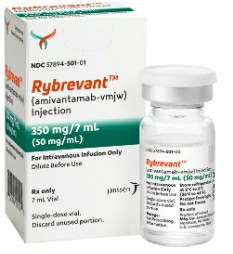
The primary endpoint of the study is progression-free survival (PFS) based on Blinded Independent Central Review (BICR) and RECIST v1.1 criteria. Early data from the study showed that the doublet reduced the risk of disease progression or death by 30% compared with osimertinib (HR, 0.70; 95% CI, 0.58-0.85; P<0.001). 2The median PFS for the combination was 23.7 months, compared with osimertinib16.6 months. These findings support the FDA's decision to approve evantumumab in combination with lazertinib for this population in August 2024.
A key secondary endpoint of the study is final protocol-specified OSOS, which is the focus of the current report. Other endpoints reported included intracranialPFS (icPFS), intracranial overall response rate (icORR), intracranial duration of response (icDOR), time to symptom progression (TTSP) and safety.
Of the 1,074 patients who underwent randomization, 858 patients were randomly assigned to the dual-drug group or the osimertinib group. A total of 421 patients ultimately received evantumumab/lazertinib treatment, of which 260 patients ultimately discontinued treatment. The most common reason was disease progression (33%). A total of 428 patients ultimately received osimertinib treatment, and 310 patients discontinued monotherapy. Likewise, the most common reason for discontinuation was disease progression (55%).
Baseline characteristics were well balanced across treatment groups. Across predefined subgroups, the OS benefit was generally consistent with the dual arm compared with osimertinib, except in patients 65 years or older (HR, 1.11; 95% CI, 0.84-1.48). Yang said 74% of patients received second-line treatment, suggesting that it is feasible to develop a long-term treatment plan after first-line treatment with evantumumab/lazertinib. The most common subsequent treatment category was chemotherapy in both arms. Of note, this trial did not allow crossover.
The icPFS of the dual drug group was longer than osimertinib, with a median of 25.4 months respectively ( 95% CI, 20.1-29.5) and 22.2 months (95% CI, 18.4-26.9) (HR, 0.79; 95% CI, 0.61-1.02; P=0.07). The 3-year milestone icPFS rates in each group were 36% and 18%, respectively. The dual drug also showed more durable responses and improved icDOR compared with osimertinib. The icORR of evantumumabcombined with lazertinib was 78% (95%CI, 71%-84%), while osimertinib was 77% (95%CI, 71%-83%), and the median icDOR in each group was 35.7 months (95%CI25.8-NR) and 29.6 months (95%CI 23.9-34.1).
Additionally, the dual effect continued to significantly delay the onset or progression of lung cancer symptoms by a median of more than14 months. The median TTSP for the combination was 43.6 months (95% CI, 36.0-NR), whereasosimertinib was 29.3 months (95% CI, 26.4-33.4) (HR, 0.69; 95% CI, 0.57-0.83; P<0.001).
The median duration of treatment was 27.0 months in the double arm and 22.4 months in the osimertinib arm. The toxicity profile of this combination was consistent with previous reports. Most toxicities experienced in the doublet arm were related to EGFR or MET inhibition and were grade 1 or 2 in severity. Twenty-one percent of patients received antibiotics for their rash at the start of the study. At baseline, 5% of patients were receiving anticoagulant therapy; 40% of patients receiving dual therapy and 11% of those receiving osimertinib monotherapy experienced a venous thromboembolic event (VTE). Of note, most first episodes of AES occur in the early 0 to 4 months of life. Long-term follow-up did not reveal any new safety signals, suggesting that long-term combination therapy is feasible.
In addition, premature adverse events can be significantly reduced by utilizing preventive strategies. For example, COCOON DM reduced grade 2 or higher skin toxicity by approximately 2-fold, SKIPPirr reduced infusion-related reactions by approximately 3-fold, and prophylactic anticoagulation reduced VTE by approximately 2-fold.
Reference materials:https://www.oncnursingnews.com/view/first-line-amivantamab-with-lazertinib-boosts-os-in-egfr-mutated-nsclc
[ 免责声明 ] 本页面内容来自公开渠道(如FDA官网、Drugs官网、原研药厂官网等),仅供持有医疗专业资质的人员用于医学药学研究参考,不构成任何治疗建议或药品推荐。所涉药品可能未在中国大陆获批上市,不适用于中国境内销售和使用。如需治疗,请咨询正规医疗机构。本站不提供药品销售或代购服务。


