
.jpeg)
Afatinib’s efficacy mechanism and therapeutic indications
Afatinib (Afatinib) is a second-generation oral irreversible epidermal growth factor receptor (EGFR) tyrosine kinase inhibitor (TKITKI pan>), mainly used to treat patients with non-small cell lung cancer (NSCLC) carrying specific EGFR gene mutations. It can not only inhibit the EGFR signaling pathway, but also inhibit other ErbB family members such as HER2 and HER4, thereby inhibiting the growth of tumor cells and promoting apoptosis. Compared with first-generation EGFR inhibitors such as erlotinib and gefitinib, the irreversible binding mechanism of afatinib can extend the time of target inhibition and reduce the impact of some drug-resistant mutations.
The indications of afatinib are mainly concentrated in EGFR sensitive mutation-positive non-small cell lung cancer, especially patients with exon 19 deletion or exon 21 L858R mutation. Clinical studies have shown that afatinib can significantly prolong progression-free survival (PFS) in first-line treatment, and also shows certain efficacy against brain metastasis. In addition, afatinib is effective against certain uncommon EGFR mutations (such as G719X, L861Q , S768I, etc.) are also active, which provides a new treatment option in some cases where first-generation EGFR-TKI is ineffective.
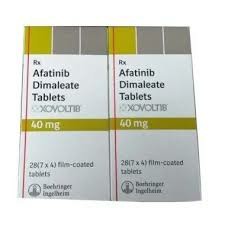
It is worth noting that although afatinib, as an irreversible inhibitor, has good efficacy, it may also cause more adverse reactions such as rash, diarrhea, stomatitis, etc. In clinical applications, doctors usually adjust the dosage according to the patient's individual tolerance to balance efficacy and safety. In addition, afatinib has also been studied to explore its application in lung cancer, breast cancer or other solid tumors related to HER2 mutations, but it is still in the clinical trial stage and has not yet become a standard treatment.
In general, afatinib, as a second-generation EGFR-TKI, is EGFRLonger-lasting, more comprehensive targeted therapy options for patients with mutation-positive non-small cell lung cancer. It can not only cover classic sensitive mutations, but also shows activity against some rare mutations, making it an important member of targeted therapy. In clinical practice, doctors will reasonably choose whether to use afatinib based on the patient's mutation type, disease characteristics, and tolerance to achieve personalized and precise treatment.
References:https://www.giotrif.com/
[ 免责声明 ] 本页面内容来自公开渠道(如FDA官网、Drugs官网、原研药厂官网等),仅供持有医疗专业资质的人员用于医学药学研究参考,不构成任何治疗建议或药品推荐。所涉药品可能未在中国大陆获批上市,不适用于中国境内销售和使用。如需治疗,请咨询正规医疗机构。本站不提供药品销售或代购服务。


