
.jpeg)
Acotinib plus bendamustine and rituximab shows long-term activity in first-line and MCL R/R
Based on the published final analysis of the Phase 1b ACE-LY-106 study (NCT02717624), acretinib/acalabrutinib ( Acalabrutinib) combined with bendamustine and rituximab (Rituxan; BR) is safe and effective in the treatment of patients with treatment-naïve and relapsed/refractory mantle cell lymphoma (MCL).
In the untreated cohort (n=18), the median follow-up was 47.6 months (range, 0.6-72.4), and the median overall survival (OS) could not be estimated (NE; 95% CI, 26.0-NE); the 12-month and 36-month OS rates were 88.9% (95% CI, 62.4%-97.1%) and 74.6% (95% CI, 45.0%-89.8%), respectively. The median progression-free survival (PFS) was NE (95%CI, 16.4-NE); the 12-month and 36-month progression-free survival rates were 88.5% (95%CI, 61.4%-97.0%) and 68.1% (95%CI, 39.2%-85.4%).
In the relapsed/refractory cohort (n=20), the median follow-up was 20.4 months (range, 1.2-64.2), and the median OS was NE (95%C I, 16.6-NE); the 12-month and 36-month OS rates were 88.7% (95% CI, 61.4%-97.1%) and 69.7% (95% CI, 41.5%-86.2%) respectively. The median progression-free survival was 28.6 months (95%CI, 11.8-NE); the 12-month and 36-month progression-free survival rates were 73.0% (95%CI,< /span>46.7%-87.8%) and 47.3% (95%CI, 22.6%-68.6%).
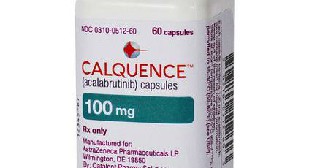
The higher specificity of acotinib underlies the current study hypothesis, which confirms that the addition of acalarutin to BR can produce durable responses without a new safety signal. In January 2025, the U.S. Food and Drug Administration (FDA) approved acotinib and BR combination therapy for the treatment of adult patients with untreated MCL who are ineligible for autologous hematopoietic stem cell transplantation (HSCT). The regulatory decision was supported by results from the ECHO phase 3 trial (NCT02972840), which showed that patients receiving triple therapy achieved a significant PFS benefit compared with patients treated with placebo plus BR (HR, 0.73; 95% CI, 0.57-0.94; P=0.016). ECHO was initiated based on previous findings from ACE-LY-106.1.
ACE-LY-106 is a multicenter, open-label study enrolling patients with MCL who carry the translocation t(11;14)(q13;q32) and/or overexpress cyclin D1 and have an ECOG performance status of 2 or lower. Patients in the relapsed/refractory cohort had received at least 1 line of therapy; those who had received BTK or BCL-2 inhibitors and those with severe cardiovascular disease were excluded. The primary endpoint is safety. Secondary endpoints include overall response rate (ORR), duration of response (DOR), and PFS.
The ORR in the initial treatment cohort, as assessed by the investigators according to Lugano criteria, was 94.4% (95% CI, 72.7%-99.9%), and the complete response (CR) rate was 77.8%. In the relapsed/refractory cohort, these rates were 85.0% (95% CI, 62.1%-96.8%) and 70.0%, respectively. The median DOR was not reached, respectively, at 43.5 months.
In terms of safety, common any-grade treatment-related adverse events (AEs) in the overall population included infection (73.7%), neutropenia (60.5%), and nausea (57.9%). Serious adverse events (SAEs) of any grade occurred in 61.1% and 65.0% of patients in the treatment-naïve and relapsed/refractory cohorts, respectively. Five patients died in the treatment-naive cohort and 6 patients died in the relapsed/refractory cohort.
At the end of the study, 26.3% of patients were still receiving acotinib. Reasons for study discontinuation included death (26.3%), disease progression (13.2%), withdrawal of consent (5.3%), investigator withdrawal (5.3%), adverse events/serious adverse events (7.9%) or other reasons (15.8%).
The study authors wrote in their conclusion: "The safety profile of acotinib plus BR was consistent with what would be expected for the individual drugs in the combination regimen." "AcotinibcombinationBR showed high efficacy in the treatment of patients with treatment-naïve and relapsed/refractory MCL. Nonetheless, the limited sample size limits the full interpretation of some observations. The study results support the ongoing placebo-controlled phase 3 ECHO trial In this trial, we will further explore the efficacy of acotinib combined with BR in the treatment of patients with newly treated MCL. This trial aims to confirm the safety and efficacy of long-term acotinib combined with BR.
Reference materials:https://www.onclive.com/view/acalabrutinib-plus-bendamustine-and-rituximab-displays-long-term-activity-in-frontline-and-r-r-mcl
[ 免责声明 ] 本页面内容来自公开渠道(如FDA官网、Drugs官网、原研药厂官网等),仅供持有医疗专业资质的人员用于医学药学研究参考,不构成任何治疗建议或药品推荐。所涉药品可能未在中国大陆获批上市,不适用于中国境内销售和使用。如需治疗,请咨询正规医疗机构。本站不提供药品销售或代购服务。


