
.jpeg)
Entrectinib reaches objective response rate endpoint in ROS1+ non-small cell lung cancer
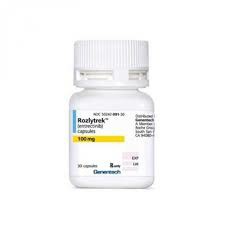
The ROS1, TRK, and ALK tyrosine kinase inhibitor (TKI) entrectinib(< span>Entrectinib)met the primary endpoint of objective response rate (ORR) in patients withROS1-positive non-small cell lung cancer (NSCLC).
Data from trial cohort D evaluating patients with ROS1-positive disease showed a confirmed investigator-assessed ORR of 81.5% (95% CI, 68.6%-90.8%), matching the independent review facility (IRF) assessment. Additionally, the safety profile of entrectinib with liquid biopsy in the BFAST study was consistent with previous reports of this drug. The results of liquid biopsy may support its clinical value as a less invasive diagnostic alternative with faster turnaround time compared to tissue-based testing. Tumor assessments were performed every 8 weeks, starting at baseline. In addition, for adverse reactions (AEs), dose reductions of 200 mg were allowed and treatment interruptions were allowed for up to 28 days.
The primary endpoint of the study was investigator-confirmedORR. Secondary endpoints include investigator-assessed clinical benefit rate (CBR), duration of response (DOR), and progression-free survival (PFS), as well as overall survival (OS), time to central nervous system (CNS) progression, and safety. The median follow-up time is 18.3 months, and the data cutoff date is November 2021.
According to the investigators' assessment, 2 cases (3.7%) had complete remission, 42 cases (77.8%) had partial remission, 7 cases (13.0%) had stable disease, and 3 cases (5.6%) had disease progression. According to IRF assessment, 3 cases (5.6%) had complete remission, 41 cases (75.9%) had partial remission, 7 cases (13.0%) had stable disease, 1 case (1.9%) had disease progression, and 2 cases (3.7%) could not be evaluated.
The CBR between investigator andIRF assessment was 87.0% (95% CI, 75.1%-94.6%) and 81.5% (95% CI, 68.6%-90.8%) for the control group. The median DOR was 13.0 months (95% CI, 6.3-18.4) and 16.7 months, respectively, and the 12-month event-free rates were 53.2% and 57.3%, respectively.
According to researchers andAs assessed by IRF, the median progression-free survival times were 12.9 months (95% CI, 8.7-18.5) and 14.8 months (95% CI, 7.2-24.0) respectively, and the 12-month progression-free survival rates were 50.7% and 52.4% respectively. Additionally, the median time to central nervous system progression could not be assessed, and the 12-month event-free rates at each assessment were 83.5% and 86.4%, respectively. OS data are immature; 20 events (36.4%) were recorded, and the 12-month OS probability was 79.0%.
All cohortD patients (n=55) received at least 1 dose of entrectinib for a median treatment duration of 12.8 months (range 1-33). Treatment-related adverse events (TRAEs) occurred in 51 patients (92.7%), including 7 (12.7%) patients who had at least 1 serious TRAE. TRAEs resulted in dose reductions in 20 cases (36.4%), dose interruptions in 11 cases (20.0%), and dose interruptions in 3 cases (5.5%). In addition, 31 (56.4%) patients had adverse events of grade 3 or higher, and 2 (3.6%) died from adverse events.
Overall, the safety profile of entrectinib in BFAST was consistent with that previously reported. Entrectinib was well tolerated and no new safety signals were identified. The high median dose intensity[>97%] indicates that nearly all patients received the full planned dose and that dose reductions and/or interruptions did not affect overall dose exposure. Taken together, these data provide further evidence that entrectinib is effective and well tolerated in patients with ROS1-positive, advanced/metastatic NSCLC.
Reference materials:https://www.cancernetwork.com/view/entrectinib-meets-objective-response-rate-end-point-in-ros1-nsclc
[ 免责声明 ] 本页面内容来自公开渠道(如FDA官网、Drugs官网、原研药厂官网等),仅供持有医疗专业资质的人员用于医学药学研究参考,不构成任何治疗建议或药品推荐。所涉药品可能未在中国大陆获批上市,不适用于中国境内销售和使用。如需治疗,请咨询正规医疗机构。本站不提供药品销售或代购服务。


