
.jpeg)
New data released on Tarlatamab: new hope for improving survival in small cell lung cancer
In 2025, Amgen announced an important research progress: its innovative immunotherapy drug Tarlatamab (Tarlatamab, trade name
Small cell lung cancer is a highly malignant type of lung tumor that progresses rapidly and has strong metastasis ability. Although the initial response to platinum drugs is good, most patients will relapse within a short period of time. To deal with this dilemma, scientists are constantly seeking new targeted therapies. Talatumumab is a bispecific T cell-engaging antibody that can simultaneously recognize DLL3 protein and TCD3 molecules on the surface of T cells can guide T cells to directly kill cancer cells. Because DLL3 is highly expressed in the vast majority of patients with small cell lung cancer but is barely expressed in normal tissues, making it a highly potential therapeutic target.
In the previous 2 phase DeLLphi-301 study, talatumumab has demonstrated significant anti-cancer activity, prompting the United States The FDA granted accelerated approval in 2023 for the treatment of adult patients with extensive-stage small cell lung cancer (ES-SCLC) who have received platinum-based chemotherapy. Although this approval was based on the results of early studies, the subsequent Phase III study of DeLLphi-304 has further verified its clinical benefits and provided a strong basis for full approval.
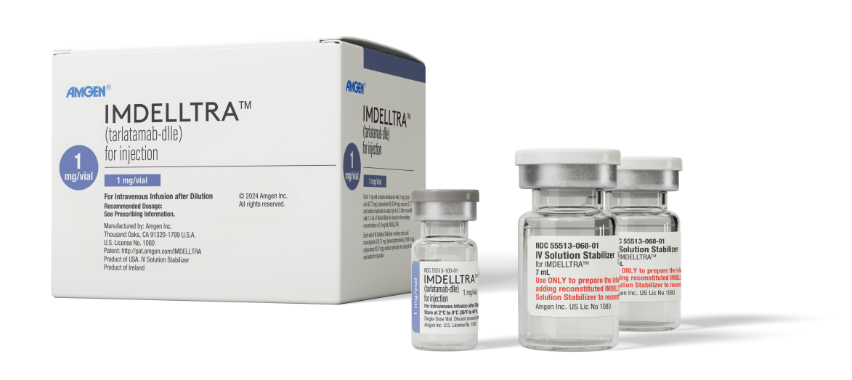
Specific data show that in the efficacy data announced at the World Lung Cancer Conference in 2024, the median follow-up time is 13.6months, the overall response rate (ORR) of patients treated with talatumumab reached 40.4%. In the 10dose group, approximately 47.5% of patients who responded had sustained response, and the median duration of response had not yet been reached (DOR). The median progression-free survival (PFS) was 4.3 months, while the median overall survival (OS) was 15.2 months The survival rates of 6 months and 12 months were 73.4% and 56.7% respectively, reflecting obvious survival benefits.
In terms of safety, the overall performance of talatumumab is basically consistent with known data. The most common adverse reactions include chronic sinusitis, fatigue, pyrexia, dysgeusia, decreased appetite, musculoskeletal pain, constipation, anemia, and nausea. It is important to note that the drug comes with a black box warning, indicating that severe or fatal cytokine release syndrome (CRS) and immune-related neurotoxicity (ICANS) may occur. Therefore, patient responses need to be closely monitored during clinical use.
In general, talatumumab, as the world's first bispecific T cell-engaging drug targeting DLL3 , has shown revolutionary potential in the treatment of small cell lung cancer. With the continued release of phase III clinical data, this drug is expected to become an important part of the standard second-line treatment for extensive-stage small cell lung cancer in the future. For patients whose disease has relapsed after traditional chemotherapy, talatumumab offers real hope and options.
References:Imdelltra® demonstrated superior overall survival in small cell lung cancer. News release. Amgen. April 11, 2025. Accessed April 13, 2025.
[ 免责声明 ] 本页面内容来自公开渠道(如FDA官网、Drugs官网、原研药厂官网等),仅供持有医疗专业资质的人员用于医学药学研究参考,不构成任何治疗建议或药品推荐。所涉药品可能未在中国大陆获批上市,不适用于中国境内销售和使用。如需治疗,请咨询正规医疗机构。本站不提供药品销售或代购服务。


