
.jpeg)
Larotrectinib welcomes breakthrough in treating NTRK fusion tumors: new data on indication expansion and long-term efficacy released
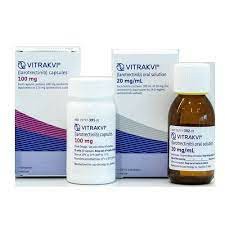
In 2025, the U.S. Food and Drug Administration (FDA) officially approved larotrectinib (Larotrectinib) for the treatment of patients with solid tumors carrying NTRK gene fusion. This blanket approval not only applies to adults, but also covers pediatric patients. Larotrectinib provides new treatment hope for patients whose tumors have metastasized, cannot be surgically removed, or whose disease has progressed after receiving existing therapies and for whom there are currently no effective alternative treatments. This approval marks larotrectinib's entry into a wider clinical application stage after being approved based on the accelerated pathway in 2018.
Larotinib is the first approved NTRK targeted inhibitor. Its mechanism of action is mainly to inhibit the tyrosine kinase activity driven by NTRK gene fusion, thereby preventing the growth and spread of tumor cells. This mechanism is highly specific and does not depend on the origin of the tumor, making it a "tissue-independent" precision therapeutic drug. In 2022, the Chinese Food and Drug Administration also approved the marketing of larotrectinib, which is suitable for patients with solid tumors containing NTRK fusion genes, further expanding its global application scope.
This FDA comprehensive approval is strongly supported by the results of three important clinical studies, namely LOXO-TRK-14001, SCOUT and The NAVIGATE study enrolled a total of 339NTRK fusion-positive adult and pediatric patients with solid tumors. All patients had disease progression after previously receiving standard treatments, or were locally advanced and difficult to undergo surgical resection. Efficacy analysis results show that the objective response rate (ORR) of larotrectinib reaches 60%, of which complete response (CR) rate was 24%, and the partial response rate was 36%. The median duration of response (DOR) was 43.3 months, indicating that the drug has durable efficacy.
In terms of security, a summary of analysis444adverse reactions in patients. The most common side effects include anemia, low albumin, musculoskeletal pain, elevated alkaline phosphatase, leukocyte and lymphopenia, hypocalcemia, and gastrointestinal symptoms such as vomiting, nausea, diarrhea, etc. Adverse reactions related to the central nervous system are also prominent, including cognitive impairment, mood changes and sleep disorders. About 3.8% of patients experienced serious reactions of grade 3 or grade 4.
Follow-up data released at the 2023 American Society of Clinical Oncology (ASCO) annual meeting also further confirmed the long-term efficacy of larotrectinib. Across three clinical trials, a total of 180 adult patients with non-CNS primary NTRK fusion-positive solid tumors were included in the analysis. Major tumor types include lung cancer, thyroid cancer, soft tissue sarcoma, salivary gland cancer, and colon cancer. ORR was 57%, and the median response time was 43.3 months. The median progression-free survival was 24.6 months and the overall survival was 48.7 months, maintaining a durable response and survival rate of more than 50% at 24 months respectively.
To sum up, larotrectinib is gradually establishing its core position in the treatment of NTRK gene fusion-positive tumors due to its advantages of strong targeting, long-lasting efficacy, and relatively controllable safety. In the future, with the advancement of more clinical research, its indications are expected to be further expanded, bringing hope to more patients.
Reference: U.S. FDA Grants Full Approval of VITRAKVI® (larotrectinib) for Adult and Pediatric Patients with NTRK Gene Fusion-Positive Solid Tumors. Businesswire. April 10, 2025. Accessed April 10, 2025.
[ 免责声明 ] 本页面内容来自公开渠道(如FDA官网、Drugs官网、原研药厂官网等),仅供持有医疗专业资质的人员用于医学药学研究参考,不构成任何治疗建议或药品推荐。所涉药品可能未在中国大陆获批上市,不适用于中国境内销售和使用。如需治疗,请咨询正规医疗机构。本站不提供药品销售或代购服务。


