
.jpeg)
How to specify the usage and dosage of durvalumab
Durvalumab/Durvalumab is an immune checkpoint inhibitor targeting programmed death ligand-1 (PD-L1) and is widely used in the treatment of various malignant tumors. According to global authoritative guidelines and drug instructions, durvalumab needs to be diluted and used via intravenous infusion, with each infusion taking no less than 60 minutes to ensure that the drug enters the body evenly and reduces infusion-related reactions. The dosage and medication frequency corresponding to different disease indications, patient weight, and treatment stages vary, and individualized treatment plans must be strictly followed.
In the neoadjuvant and adjuvant treatment of resectable non-small cell lung cancer (NSCLC), patients weighing ≥30kg are given chemotherapy in combination with chemotherapy once every 3 weeks, 1500mg each time, for a maximum of 4 cycles; after surgery, single-agent adjuvant therapy is given, 1500mg once every 4 weeks, for a maximum of 12 cycles. For patients weighing less than 30 kg, 20 mg/kg is given every 3 weeks for a maximum of 4 cycles during the neoadjuvant period, and 20 mg/kg is given every 4 weeks for postoperative adjuvant therapy. Treatment continues until a maximum of 12 cycles after surgery or until disease progression or unacceptable toxicity occurs.
For patients with unresectable stage III NSCLCconsolidation therapy with durvalumab can be initiated after concurrent platinum-based chemotherapy and radiotherapy. Patients weighing ≥30kg should be dosed once every 2 weeks, 10mg/kg each time, or once every 4 weeks, 1500mg each time; while those weighing <30kg, should be dosed once every 2 weeks, 10mg/kg each time. Treatment continued until disease progression, intolerable toxicity, or up to 12 months.
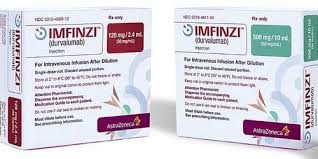
In the treatment of metastatic NSCLCDurvalumab is usually used in combination with tremelimumab and platinum-based chemotherapy. For those weighing ≥30kg, the three-drug combination should be given once every 3 weeks, 1500 mg each time, for 4 cycles; then it is changed to maintenance treatment alone, 1500 mg once every 4 weeks, in conjunction with pemetrexed maintenance treatment once every 4 weeks. At week 16, tremelimumab (75 mg) was added again. For patients weighing less than 30 kg, the dosage is 20 mg/kg, and the dose of tremelimumab is adjusted to 1 mg/kg, with similar treatment patterns.
In patients with limited-stage small cell lung cancer (LS-SCLC), after concurrent chemoradiotherapy, those weighing ≥30kg should be given 1500mg once every 4 weeks; those with a weight <30kg should be given 20mg/kg once every 4 weeks. Treatment is continued until disease progression or up to 24 months, showing the potential to significantly extend progression-free survival.
For extensive-stage small cell lung cancer (ES-SCLC) patients, durvalumab combined with etoposide and platinum drugs once every 3 weeks, the dose is 1500 mg for those weighing ≥30kg, and 20mg/kg for those weighing <30kg. After completing the combination phase, patients ≥30kg will be switched to 1500mg single-agent maintenance every 4 weeks, and patients <30kg will receive 10mg/kg every 2 weeks until disease progression or unacceptable toxicity.
In the treatment of cholangiocarcinoma (BTC), durvalumab is used in combination with chemotherapy. For patients weighing ≥30kg, take 1500mg once every 3 weeks. After the combination phase, continue single-agent maintenance therapy with the same dose once every 4 weeks; patients weighing <30kg should take 20mg/kg respectively. Research shows that combination immunotherapy offers patients with cholangiocarcinoma a new chance of long-term survival.
Unresectable hepatocellular carcinoma (uHCC) is also included in the treatment scope of imrvalumab. In the initial stage of treatment, patients weighing ≥30 kg received a dose of 1500 mg on day 1 of cycle 1, combined with tremelimumab 300 mg, and then continued single-agent maintenance every 4 weeks. For patients weighing less than 30kg, start with a dose of 20mg/kg combined with 4mg/kg of tremelimumab. The entire course of treatment was continued until disease progression or intolerable toxicity.
Durvalumab has also shown promise in patients with endometrial cancer characterized bydMMR (mismatch repair deficiency). In the initial stage, it needs to be combined with carboplatin and paclitaxel, and patients weighing ≥30kg will receive 1120mg once every 3 weeks for 6 cycles; while patients weighing <30kg will receive 15mg/kg each time. Similarly, after the end of combination therapy, patients continue to receive single-drug maintenance (1500mg for ≥30kg, 20mg/kg for <30kg) every 4 weeks until disease progression or intolerable side effects occur.
It should be emphasized that although durvalumab is generally well tolerated, potential immune-related side effects such as pneumonia, hepatitis, endocrine dysfunction (thyroiditis, diabetes, adrenal insufficiency, etc.), rash, and gastrointestinal adverse reactions need to be closely monitored in clinical application. When serious adverse reactions occur, the dose should be adjusted promptly, treatment interrupted or the drug permanently discontinued according to the degree of toxicity. Management of some immune-mediated toxicities may require short-term administration of corticosteroids or immunosuppressants.
In addition, patients should undergo detailed screening before receiving durvalumab treatment, includingPD-L1 expression level assessment, basic liver and kidney function testing, cardiopulmonary function assessment, etc., in order to develop the most suitable individualized medication plan. During the treatment process, imaging examinations (such as CT or MRI) should be performed regularly to monitor disease progression or remission, and the efficacy should be comprehensively evaluated based on clinical manifestations.
With the continuous in-depth research on immunotherapy, durvalumab is also exploring more combination treatment modes, such as combined application with radiotherapy, anti-angiogenic therapy, and other immune drugs, striving to improve the efficacy while delaying the occurrence of drug resistance and further improving the long-term survival rate of patients.
Reference materials:https://www.imfinzi.com/
[ 免责声明 ] 本页面内容来自公开渠道(如FDA官网、Drugs官网、原研药厂官网等),仅供持有医疗专业资质的人员用于医学药学研究参考,不构成任何治疗建议或药品推荐。所涉药品可能未在中国大陆获批上市,不适用于中国境内销售和使用。如需治疗,请咨询正规医疗机构。本站不提供药品销售或代购服务。


