
.jpeg)
Health Canada approves durvalumab monotherapy for limited-stage small cell lung cancer
Health Canada has approved a compliance notification for durvalumab as monotherapy for the treatment of patients with limited-stage small cell lung cancer (LS-SCLC) whose disease has not progressed following platinum-based chemoradiotherapy.
The approval is based onresults from the phase 3 ADRIATIC trial, in which durvalumab demonstrated a median overall survival (OS) of 55.9 months (95% CI, 37 .3 not evaluable), compared with placebo, median overall survival was 33.4 months (95% CI, 25.5-39.9) (HR, 0.73; 95% CI, 0.57-0.93; P=0.0104). Median progression-free survival (PFS) was also improved in the durvalumab group, which was 16.6 months (95% CI, 10.2-28.2) compared with 9.2 months (95% CI, 7.4-12.9) in the placebo group (HR, 0.76; 95% CI, 0.61-0.95; P=0.0161).
With this approval, we can now offer immunotherapy to patients with LS-CLC, which is almost always fatal, even in patients with limited disease burden. This approval joins those approved by the FDA and EMA in December 2024 and March 2025 respectively for the same indication.
This double-blind international trial enrolled patients with stage I to III LS-SCLC, including those with stage I/II inoperable disease. 2 Patients were required to have a World Health Organization performance status of 0 or 1 and be unlikely to progress following concurrent chemoradiotherapy. Prophylactic cranial irradiation was allowed before randomization.
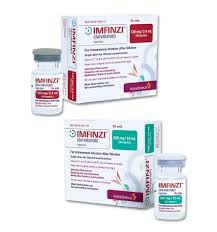
Patients (n=730) were randomly assigned to one of three arms: durvalumab alone, 1500 mg every 4 weeks; placebo every 4 weeks; or durvalumab 1500 mg every 4 weeks plus tremelimumab 75 mg every 4 weeks for 4 doses, then 1500 every 4 weeks mg administered durvalumab monotherapy (n=200). Treatment continued until disease progression, unacceptable toxicity, or up to 24 months.
Based on blinded independent central review (BICR) and RECIST 1.1 criteria, the dual primary endpoints of durvalumab alone versus placebo are OS and PFS. Key secondary endpoints include OS and PFS with durvalumab plus tremelizumab compared with placebo according to BICR and RECIST 1.1 criteria.
Other efficacy data showed that the 3-year OS rate of durvalumab was 56.5% and that of placebo was 47.6%. The 2-year progression-free survival rates for durvalumab and placebo were 46.2% and 34.2%, respectively.
With regard to safety, 94.3% (n=262) of evaluable patients who received durvalumab experienced adverse events (AEs) of any grade compared with 88.3% (n=265) of patients who received placebo; 24.4% and 24.2% of patients had grade 3/4 severity, respectively. Serious adverse events occurred in 29.8% of patients taking durvalumab compared with 24.2% of patients taking placebo.
The most common adverse events, occurring in at least10% of patients in the durvalumab group, were pneumonia or radiation pneumonitis, decreased appetite, hypothyroidism, cough, pruritus, nausea, dizziness, fatigue, diarrhea, pneumonia, rash, constipation, and hyperthyroidism. Adverse events caused 16.4% and 10.6% of patients to discontinue treatment, respectively; 2.7% and 1.9% of patients died.
References:https://www.onclive.com/view/health-canada-approves-durvalumab-monotherapy-for-limited-stage-small-cell-lung-cancer
[ 免责声明 ] 本页面内容来自公开渠道(如FDA官网、Drugs官网、原研药厂官网等),仅供持有医疗专业资质的人员用于医学药学研究参考,不构成任何治疗建议或药品推荐。所涉药品可能未在中国大陆获批上市,不适用于中国境内销售和使用。如需治疗,请咨询正规医疗机构。本站不提供药品销售或代购服务。


