
.jpeg)
Analysis of the role and efficacy of pazopanib/pazopanib
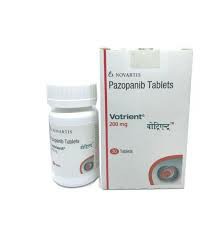
Pazopanib is a new oral multi-target tyrosine kinase inhibitor (TKI) with the trade name Votrient. It mainly exerts anti-cancer effects by inhibiting tumor cell growth and tumor angiogenesis. Its main targets include vascular endothelial growth factor receptors (VEGFR-1, 2, 3), platelet-derived growth factor receptors (PDGFR-α/β) and c-Kit. It is clinically approved for the treatment of advanced renal cell carcinoma (RCC) and soft tissue sarcoma (STS). There are also studies exploring its potential efficacy in other solid tumors.
In the treatment of metastatic renal cell carcinoma, pazopanib has been included in the treatment guidelines of many countries and regions. According to data from international multi-center clinical studies (such as the VEG105192 study), pazopanib significantly prolonged progression-free survival (PFS) in the treatment of RCC patients who had not received systemic treatment before, with a median PFS of 9.2 months, much higher than the 4.2 months in the placebo group. The drug has shown good clinical benefits in different stratified populations, especially in tumor types with active VEGF pathways. In addition, the disease control rate of pazopanib is also high, and some patients can achieve tumor shrinkage or even stable control for more than one year.
Pazopanib also shows good efficacy in the treatment of soft tissue sarcoma. As one of its key clinical trials, the PALETTE study included patients with multiple types of advanced soft tissue sarcoma. The results showed that compared with placebo, pazopanib significantly prolonged the progression-free survival time of patients. The median PFS was 4.6 months, which was significantly better than the 1.6 months in the placebo group. This study provides solid evidence to support the use of pazopanib in relapsed or refractory soft tissue sarcoma, and ultimately promotes it to become one of the important second-line treatment options for advanced soft tissue sarcoma.
From a clinical application perspective, a significant advantage of pazopanib is its once-daily oral administration, which improves patient compliance and quality of life. In addition, compared with traditional chemotherapy, its toxicity spectrum is relatively controllable. Although there are common adverse reactions such as hypertension, abnormal liver function, diarrhea, fatigue, etc., most of them are reversible and can be managed through dose adjustment or symptomatic and supportive treatment.
However, its limitations also need to be faced in the efficacy analysis. For example, although PFS and disease control rates have been significantly improved, the efficacy of some patients may gradually weaken due to the emergence of resistance mechanisms. There is currently a lack of biomarkers that can accurately predict efficacy, and there are no clear boundaries for treatment duration. In addition, the heterogeneity of its efficacy in specific molecular subtypes or mutational backgrounds has also become the focus of subsequent research.
In general, pazopanib, as a mature targeted therapy drug, has established a clear position in the treatment of renal cancer and soft tissue sarcoma. It has a clear mechanism of action, precise efficacy, and good oral convenience and management. It is an important treatment option for patients with advanced tumors. In the future, with further in-depth research on its molecular target mechanism, its application may be expanded in more solid tumor types, especially attempts to combine it with immunotherapy and other other programs, which may lead to new clinical breakthroughs.
Reference materials:https://www.votrient.com/
[ 免责声明 ] 本页面内容来自公开渠道(如FDA官网、Drugs官网、原研药厂官网等),仅供持有医疗专业资质的人员用于医学药学研究参考,不构成任何治疗建议或药品推荐。所涉药品可能未在中国大陆获批上市,不适用于中国境内销售和使用。如需治疗,请咨询正规医疗机构。本站不提供药品销售或代购服务。


