
.jpeg)
Therapeutic effect of avatrombopag tablets/Sucoxin on elevated platelets
Avatrombopag is an oral thrombopoietin receptor agonist ( TPO-RA). Its core mechanism of action is to activate the TPO receptor to stimulate the maturation and proliferation of megakaryocytes in the bone marrow, promote the production of platelets, and thereby effectively increase the platelet count. This drug has clear efficacy in the treatment of chronic immune thrombocytopenia (ITP) and chronic liver disease (CLD)-related thrombocytopenia, especially in increasing platelet levels, reducing bleeding risks and improving patients' quality of life.
In immune thrombocytopenia, the efficacy of avatrombopag has been confirmed by multiple clinical studies. Taking its application in ITP patients as an example, studies have shown that patients receiving avatrombopag can observe a significant increase in platelet count within 2 to 4 weeks, and most patients can achieve a target value of ≥50×10⁹/L within 7 to 14 days after the first dose. This value is considered a relatively safe clinical threshold and helps to significantly reduce the risk of spontaneous bleeding or bleeding caused by minor trauma. Especially among patients who have had poor response or relapse to first-line treatments such as glucocorticoids and gamma globulin, avatrombopag has a higher response rate. Long-term use can help patients maintain platelet stability and reduce the need for blood transfusions and the frequency of emergency medication.
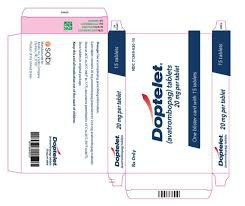
In clinical practice, the dosage of avatrombopag usually starts at 20 mg per day. Doctors will make individual adjustments based on the patient's platelet response, and the dosage can be increased to a maximum of 40 mg or lower for maintenance. It is worth emphasizing that unlike other TPO receptor agonists such as eltrombopag, avatrombopag is not affected by food and calcium, iron, magnesium and other ions during the medication process, so it can be taken with food, which not only improves patient compliance, but also greatly simplifies medication management.
Avatrombopag has also shown superior efficacy in the treatment of thrombocytopenia associated with chronic liver disease. Patients with chronic liver disease often experience significant thrombocytopenia due to hypersplenism, reduced TPO synthesis, bone marrow suppression, etc., which increases the risk of bleeding when performing invasive procedures such as liver puncture and radiofrequency tumor ablation. The traditional treatment method is platelet transfusion, but its maintenance time is short and the risk is high, and some patients have immune antibodies that make the transfusion ineffective. The launch of avatrombopag provides a new non-transfusion alternative for this type of patients. Studies have found that when CLD patients start taking avatrombopag (generally 40 mg/day for 5 consecutive days) 5 days before surgery, more than 80% of patients can increase their platelets to >50×10⁹/L before surgery, thus allowing smooth operation without the need for platelet transfusion and significantly reducing perioperative bleeding events.
In terms of safety, the adverse reactions of avatrombopag are generally controllable. Common side effects include headache, fatigue, nausea, diarrhea, etc., which are generally mild to moderate and reversible. Compared with some TPO-RAs, it has less impact on liver function and is more suitable for patients with abnormal liver function. In addition, during the process of platelet elevation, there is theoretically a certain risk of thrombosis, but research data shows that under the premise of standardized dosage and close monitoring, this risk is low, especially compared with eltrombopag, it performs better in controlling thrombotic complications. Patients should check their platelet count regularly during use to avoid the risk of excessive elevation.
Reference materials:https://go.drugbank.com/drugs/DB11995
[ 免责声明 ] 本页面内容来自公开渠道(如FDA官网、Drugs官网、原研药厂官网等),仅供持有医疗专业资质的人员用于医学药学研究参考,不构成任何治疗建议或药品推荐。所涉药品可能未在中国大陆获批上市,不适用于中国境内销售和使用。如需治疗,请咨询正规医疗机构。本站不提供药品销售或代购服务。


