
.jpeg)
Progress of the domestic launch of serputinib/serpatinib
Selpercatinib is a targeted drug targeting RET gene fusion or mutation. It is mainly used to treat RET-related non-small cell lung cancer (NSCLC) and other tumor types. The drug has received widespread attention internationally, especially in the field of targeted therapy. Regarding the progress of serpatinib’s domestic launch, there have been positive developments in recent years.
The research and development of serpatinib is led by Eli Lilly and Company. The drug received accelerated approval from the U.S. Food and Drug Administration (FDA) in 2020 for the treatment of patients with RET gene fusion-positive non-small cell lung cancer. This approval provides an effective treatment option for clinical use and fills the gap in targeted therapy for RET-positive tumors. In the international market, serpatinib has been launched and promoted rapidly, showing its good clinical application prospects and market potential.
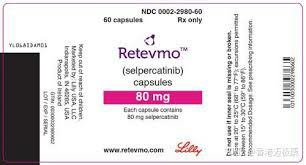
On September 30, 2022, the China National Medical Products Administration (NMPA) conditionally approved serpatinib for the treatment of RET fusion-positive locally advanced or metastatic NSCLC, adults and pediatric patients 12 years and older with advanced or metastatic RET-mutant medullary thyroid cancer (MTC) who require systemic therapy, and adults and pediatric patients 12 years and older with advanced or metastatic RET fusion-positive thyroid cancer who require systemic therapy and are refractory to radioactive iodine therapy.
Clinical studies have shown that serpatinib has significant efficacy in the treatment of RET fusion-positive NSCLC patients. In first-line treatment, the objective response rate (ORR) reached 84% and the median progression-free survival (mPFS) was 22 months; in second-line treatment, the ORR was 61% and mPFS was 24.9 months. For patients with brain metastases, the intracranial ORR was 85% and the intracranial disease control rate (DCR) was 100%. In the treatment of patients with RET mutant MTC, the ORR was 58.6%, of which the ORR was 58.8% in treatment-naïve patients and 58.3% in previously treated patients.
Reference:https://en.wikipedia.org/wiki/Selpercatinib
[ 免责声明 ] 本页面内容来自公开渠道(如FDA官网、Drugs官网、原研药厂官网等),仅供持有医疗专业资质的人员用于医学药学研究参考,不构成任何治疗建议或药品推荐。所涉药品可能未在中国大陆获批上市,不适用于中国境内销售和使用。如需治疗,请咨询正规医疗机构。本站不提供药品销售或代购服务。


