
.jpeg)
FDA approves nivolumab plus ipilimumab for unresectable or metastatic MSI-H or dMMR colorectal cancer
On April 8, 2025, the Food and Drug Administration (FDA) approved nivolumab (Nivolumab; brand name Opdivo, produced by Bristol-Myers Squibb Company) and Ipilimumab (Ipilimumab; brand name Yervoy, also manufactured by Bristol-Myers Squibb, is indicated in combination with in patients 12 years of age and older with unresectable or metastatic microsatellite instability-high (MSI-H) or mismatch repair deficient (dMMR) colorectal cancer (CRC). This approval brings a new treatment option to patients with advanced colorectal cancer, especially those whose disease has progressed after conventional chemotherapy.
At the same time,The FDA also decided to convert the accelerated approval of nivolumab monotherapy for the treatment of patients 12 years and older with MSI-H or dMMR metastatic colorectal cancer to regular approval. These patients progressed after chemotherapy with fluoropyrimidine, oxaliplatin, and irinotecan and required new treatment options. This approval marks the further application of immunotherapy in the treatment of colorectal cancer, particularly in cancer types that target MSI-H and dMMR.
1. Efficacy and safety
The primary basis for FDA approval came from the CHECKMATE-8HW trial (NCT04008030), a randomized, three-arm, open-label clinical trial designed to evaluate the efficacy and safety of nivolumab in combination with ipilimumab in patients with unresectable or metastatic MSI-H or dMMR colorectal cancer. In the trial, patients were randomly divided into three groups and received the following treatment options:
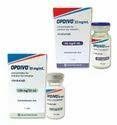
1) Nivolumab 240 mg every 3 weeks, ipilimumab 1 mg/kg every 3 weeks, up to 4 doses, then 480 mg every 4 weeks Nivolumab; 2) Nivolumab 240 mg every 2 weeks for 6 doses, then 480 mg every 4 weeks Nivolumab; investigator's choice of chemotherapy regimen (including standard fluoropyrimidine, oxaliplatin, and irinotecan).
The main efficacy indicator of the study is progression-free survival (PFS), which is the time it takes for a patient's disease to progress after treatment. PFS was assessed by a blinded independent center using RECIST v1.1 criteria, along with other efficacy measures such as overall response rate (ORR) and overall survival (OS).
In the first-line setting, a total of255 patients participated in the analysis comparing nivolumab + ipilimumab with standard chemotherapy. The results showed that the median PFS in the nivolumab + ipilimumab group was not reached (NR) (95% CI, 38.4-not estimable [NE]), while the median PFS in the chemotherapy group was 5.8 months (95% CI, 4.4-7.8). The hazard ratio between the two groups was 0.21 (95% CI, 0.14-0.32), and the p value was <0.0001, indicating that nivolumab + ipilimumab combination therapy has a significant advantage in prolonging progression-free survival.
In the broader patient population, which included582 patients who received nivolumab + ipilimumab versus nivolumab monotherapy, the median PFS in the nivolumab + ipilimumab arm was not reached (NR) (95% CI, 53.8-NE), while the median PFS in the nivolumab single-agent arm was 39.3 months (95% CI, 22.1-NE). The hazard ratio between the two groups was 0.62 (95% CI, 0.48-0.81), and the p value was 0.0003, indicating that nivolumab combined with ipilimumab treatment significantly improved progression-free survival. In addition, the ORR of the nivolumab + ipilimumab group was 71% (95% CI, 65-76), which was significantly better than the 58% (95% CI, 52-63) of the nivolumab monotherapy group, with a p value of 0.0011.
2. Adverse reactions
In the trial, patients in the nivolumab + ipilimumab group and the nivolumab alone group reported common adverse reactions. Among patients treated with the combination of nivolumab and ipilimumab, the most common adverse reactions included fatigue, diarrhea, pruritus, abdominal pain, musculoskeletal pain, and nausea, all occurring in more than 20% of patients. Most of these reactions are mild to moderate and can be relieved with appropriate symptomatic treatment. Fatigue, diarrhea, abdominal pain, pruritus, and musculoskeletal pain were also the most common adverse reactions in patients treated with nivolumab monotherapy.
Although immunotherapy often causes immune-related side effects, such as rash, itching, etc., most adverse reactions are manageable and patients can tolerate the treatment. Patients in the trial received strict monitoring during the treatment process in order to adjust the treatment plan in a timely manner and reduce the impact of adverse reactions.
References:https://www.fda.gov/drugs/resources-information-approved-drugs/fda-approves-nivolumab-ipilimumab-unresectable-or-metastatic-msi-h-or-dmmr-colorectal-cancer
[ 免责声明 ] 本页面内容来自公开渠道(如FDA官网、Drugs官网、原研药厂官网等),仅供持有医疗专业资质的人员用于医学药学研究参考,不构成任何治疗建议或药品推荐。所涉药品可能未在中国大陆获批上市,不适用于中国境内销售和使用。如需治疗,请咨询正规医疗机构。本站不提供药品销售或代购服务。


