
.jpeg)
Can I recover after taking gilitinib for three months? Efficacy analysis and treatment planning
Gilteritinib is an oral targeted drug developed for FLT3 mutation-positive relapsed or refractory acute myeloid leukemia (AML). Although it has shown significant efficacy in clinical practice, the question of "whether it can be cured after taking it for three months" requires comprehensive analysis from multiple medical levels. First of all, acute myeloid leukemia itself is a rapidly progressing malignant hematological tumor, especially subtypes with FLT3-ITD or FLT3-TKD mutations, which have a worse prognosis, are prone to relapse, and have poor response to traditional chemotherapy. Therefore, as a precise targeted drug, giritinib can effectively inhibit the growth of tumor cells and delay the progression of the disease, but it cannot simply be equated to "radical cure" or "recovery."
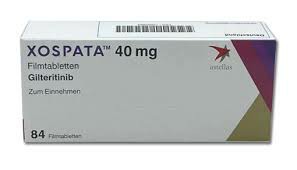
The recommended treatment period of giritinib is usually not limited to three months, but requires patients to continue taking the drug until disease progression or intolerable toxicity occurs. In the phase III ADMIRAL study, the median time for patients to receive giritinib treatment generally exceeded three months, and many patients who achieved complete response (CR) or partial response (PR) needed to continue maintenance therapy to consolidate the efficacy. After some patients achieve hematological remission under giritinib treatment, hematopoietic stem cell transplantation may need to be considered in order to achieve deeper disease control and long-term survival.
In terms of efficacy, giritinib can see signs of relief such as a decrease in white blood cell count and a decrease in blast cells in the bone marrow within a few weeks to two months, but not all patients can achieve complete remission within three months. The efficacy is affected by many factors such as the patient's condition, FLT3 mutation subtype, previous treatment history, and individual immune status. In addition, treatment with giritinib is also associated with certain risks of side effects, such as QT interval prolongation, abnormal liver function, electrolyte disorders, etc., which all require close monitoring and management under the guidance of professional doctors.
Reference materials:https://www.xospata.com/
[ 免责声明 ] 本页面内容来自公开渠道(如FDA官网、Drugs官网、原研药厂官网等),仅供持有医疗专业资质的人员用于医学药学研究参考,不构成任何治疗建议或药品推荐。所涉药品可能未在中国大陆获批上市,不适用于中国境内销售和使用。如需治疗,请咨询正规医疗机构。本站不提供药品销售或代购服务。


