
.jpeg)
Midostaurin vs giritinib: Which is better for leukemia patients
Midostaurin and Gilteritinib (Gilteritinib), as important breakthrough drugs in the field of leukemia targeted therapy in recent years, are both targeted at acute myeloid leukemia (AML) patients carrying FLT3 mutations. Although the two targets overlap, they are significantly different in terms of treatment indications, use stages, efficacy performance, and adverse reaction spectrum. Therefore, "which one is more suitable for leukemia patients" cannot be generalized, but needs to be comprehensively evaluated based on multiple factors such as the patient's disease stage, mutation type, and tolerance.
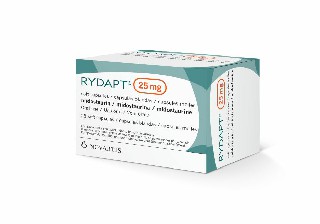
Midostaurin is the first generationFLT3 inhibitor. It also inhibits multiple other kinase targets such as KIT, PDGFR, etc. Its multi-targeting characteristics give it good therapeutic prospects in the combined chemotherapy stage. Its main indication is to combine with standard chemotherapy regimens (such as cytarabine and daunorubicin) in newly treated AML patients carrying FLT3 mutations to improve the complete remission rate and prolong disease-free survival. In a pivotal clinical trial (the RATIFY study), midostaurin combined with standard chemotherapy significantly improved overall survival, especially in younger, chemotherapy-eligible people. Therefore, for first-episode FLT3 mutation-positive AML patients, especially those whose physical status allows standard chemotherapy, the midostaurin combination regimen is one of the current standard treatments. However, its use relies on the chemotherapy process, which means it is not suitable for patients who are elderly or have serious underlying diseases and are not suitable for receiving strong myelosuppressive treatment.
In comparison, giritinib is a second-generation selective FLT3 inhibitor, which has stronger target specificity and especially inhibits resistance-related FLT3-ITD and FLT3-TKD mutations. The main indication of giritinib is for patients with relapsed or refractory FLT3-mutated AML. Single-agent treatment can show good anti-leukemia activity without the need for combination with traditional chemotherapy. The clinical trial ADMIRAL study confirmed that gilitinib is significantly better than traditional chemotherapy in this population, resulting in a higher response rate and longer median overall survival. Due to its oral administration, strong targeting, and relatively mild toxicity, giritinib is especially suitable for elderly patients, patients who are intolerant to chemotherapy or who have relapsed after treatment. It is more flexible and accessible in actual clinical practice. In addition, giritinib is also being studied as part of maintenance therapy or combined with new low-toxicity treatment regimens for disease control and long-term management.
There are also differences between the two in terms of security. Midostaurin's side effects are mainly concentrated in gastrointestinal reactions,QT interval prolongation and neutropenia, etc., while giritinib is more common with abnormal liver function, elevated creatinine and differentiation syndrome, and should be used with caution according to the specific patient conditions. If the patient has significant electrocardiogram abnormalities or digestive system diseases, it may be more appropriate to consider giritinib; conversely, in the comprehensive treatment of first-episode AML, especially in young patients, the midostaurin combination regimen has a more solid evidence-based basis.
In general, midostaurin and giritinib have their own advantages in the treatment of FLT3-mutated AML, and the superiority cannot be simply evaluated. If the patient is diagnosed with FLT3 mutation-positive AML for the first time and is in good physical condition and can tolerate strong chemotherapy, midostaurin combination therapy is the recommended option; for relapsed/refractory cases or patients who cannot tolerate strong chemotherapy, giritinib provides an efficient and tolerable treatment option. In the future, as the research on the two drugs in new indications and combination regimens continues to advance, their roles in the AML treatment sequence will become clearer. The final drug selection should be based on molecular diagnosis, clinical status and patient wishes, and should be jointly decided by a multidisciplinary team to formulate a tailor-made precise treatment strategy.
Reference materials:https://medlineplus.gov/druginfo/meds/a617033.html
[ 免责声明 ] 本页面内容来自公开渠道(如FDA官网、Drugs官网、原研药厂官网等),仅供持有医疗专业资质的人员用于医学药学研究参考,不构成任何治疗建议或药品推荐。所涉药品可能未在中国大陆获批上市,不适用于中国境内销售和使用。如需治疗,请咨询正规医疗机构。本站不提供药品销售或代购服务。


