
.jpeg)
What is ruxolitinib cream (Opzelura)? What is the mechanism of action?
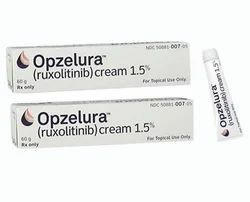
Ruxolitinib cream (Opzelura) is a topical JAK inhibitor used to treat atopic dermatitis (AD), also known as eczema. Atopic dermatitis is a common chronic and relapsing inflammatory skin disease, mainly characterized by dry skin, itching, redness, swelling and inflammation. Ruxolitinib cream is a potent topical immunomodulatory drug that reduces symptoms and improves patients' skin health by suppressing the inflammatory response in the skin.
Ruxolitinib classification and drug types
Ruxolitinib cream is a selective Janus kinase inhibitor (JAK inhibitor). This drug belongs to a class of immunosuppressive drugs that mainly interferes with the immune response by inhibiting the JAK-STAT signaling pathway. JAK(Janus Kinase, Januskinase) is an important intracellular enzyme that participates in the cell signal transmission process and affects the functions of a variety of immune cells, such as T cells, B cells, macrophages, etc. STAT (signal transducer and activator of transcription) is a key downstream transcription factor after JAK activation and is responsible for regulating a variety of cellular responses.
By inhibiting the JAK-STAT pathway, ruxolitinib can effectively reduce inflammatory factors in patients with atopic dermatitis, such as interleukins (IL-4, IL-13, etc.), which are the main driving factors of skin inflammation. Compared with traditional immunosuppressive drugs such as steroids, topical application of ruxolitinib cream can localize the drug's effects to the skin, thereby reducing the risk of systemic side effects.
How ruxolitinib cream works
The principle of action of ruxolitinib cream is based on its inhibitory effect on the JAK-STAT signaling pathway. JAK-STATThe signaling pathway plays a central role in the pathogenesis of atopic dermatitis. Normally, this signaling pathway helps regulate immune responses and cell growth, but in patients with atopic dermatitis, abnormal activation of the JAK-STAT pathway can cause the immune system to mistakenly attack the skin and induce an inflammatory response.
Ruxolitinib can reduce tyrosine kinases caused byJAK1 and JAK2 by selectively inhibiting them. span>IL-4 and IL-13 and other cytokines trigger excessive immune responses, thereby effectively suppressing the inflammatory response and reducing skin symptoms. Specifically, ruxolitinib reduces the inflammatory response, itching, redness, swelling and exudation of skin cells by inhibiting the signaling of these cytokines, while improving the repair ability of the skin barrier.
The topical use of the drug allows it to focus on the skin surface when treating atopic dermatitis, avoiding large-scale suppression of the systemic immune system, which has significant advantages in reducing systemic side effects. In addition, the form of topical application also makes the treatment process more convenient for patients and is less likely to cause skin atrophy or other side effects.
Clinical application of ruxolitinib cream
The main clinical indication for ruxolitinib cream is moderate to severe atopic dermatitis, especially in adult and adolescent patients who have failed to respond to conventional topical medications, such as steroids and immunomodulators. According to clinical studies, ruxolitinib cream can significantly improve itching, redness, and skin damage in patients with atopic dermatitis, while helping to restore skin barrier function. Its effects usually begin to show within 2 to 4 weeks after use, and can be maintained long-term in most patients.
In addition to atopic dermatitis, the potential application of ruxolitinib cream in other immune-related skin diseases (such as psoriasis, skin allergies, etc.) is also being continuously explored, but it is currently mainly used for the treatment of atopic dermatitis.
Ruxolitinib cream (Opzelura) is a selective JAK inhibitor for topical use. It mainly reduces the immune response caused by atopic dermatitis by inhibiting the JAK-STAT signaling pathway, thereby relieving skin inflammation, itching and damage. As a new type of immunomodulatory drug, ruxolitinib cream provides a clinically effective treatment option with less side effects for patients with atopic dermatitis. Through local application, it can effectively relieve symptoms while avoiding the side effects of systemic immunosuppression, providing a more precise and personalized treatment plan.
Reference materials:https://www.opzelura.com/
[ 免责声明 ] 本页面内容来自公开渠道(如FDA官网、Drugs官网、原研药厂官网等),仅供持有医疗专业资质的人员用于医学药学研究参考,不构成任何治疗建议或药品推荐。所涉药品可能未在中国大陆获批上市,不适用于中国境内销售和使用。如需治疗,请咨询正规医疗机构。本站不提供药品销售或代购服务。


