
.jpeg)
Is vituximab now on the market in China? What disease is it used to treat?
With the continuous advancement of medical technology, more and more innovative drugs are introduced into China, bringing new treatment hope to cancer patients. Among them, vibutuximab , a CD30-directed antibody-drug conjugate (ADC), has been successfully launched in China and is widely used in the treatment of lymphoma.
The active substance in brentuximabbrentuximab vedotin is composed of a monoclonal antibody (a protein) that binds to CD30 and monomethyl auristatin E, a cytotoxic (cell-killing) molecule. This unique structure enables Vibutuximab to precisely target CD30-positive cancer cells. Monoclonal antibodies serve as "navigators" to deliver the "killing weapon" monomethyl auristatin E into cancer cells. Once inside the cancer cells, the cytotoxic molecules begin to work, preventing the cancer cells from dividing, ultimately causing the cancer cells to die.
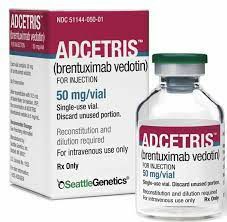
Velbutuximab was first approved by the FDA in 2011 and was subsequently approved for multiple indications, covering various types of lymphoma. It can be used in combination with doxorubicin, vinblastine, and dacarbazine in adult patients with previously untreated stage III or IV classical Hodgkin lymphoma (cHL). For pediatric patients 2 years of age and older with previously untreated high-risk classical Hodgkin lymphoma (cHL), it can be used in combination with doxorubicin, vincristine, etoposide, prednisone, and cyclophosphamide. In addition, vilbutuximab is also an important treatment option for adult patients with classic Hodgkin lymphoma (cHL) who are at high risk for recurrence or progression after consolidation therapy with autologous hematopoietic stem cell transplantation (autologous HSCT) and after failure of autologous HSCT or in patients who are non-autologous HSCT candidates after failure of at least two prior multi-agent chemotherapy regimens.
In addition to Hodgkin lymphoma, vilbutuximab is also indicated for the treatment of systemic anaplastic large cell lymphoma (sALCL) and other CD30-expressing peripheral T-cell lymphomas (PTCL). In adult patients with these diseases, ibtuximab can exert significant therapeutic effects, both in the absence of prior treatment and after failure of one or more prior multi-agent chemotherapy regimens. In addition, it can be used to treat adult patients with primary cutaneous anaplastic large cell lymphoma (pcALCL) or CD30-expressing mycosis fungoides (MF), provided these patients have received prior systemic therapy.
For patients with relapsed or refractory diseaseIn adult patients with B-cell lymphoma (LBCL), including diffuse large B-cell lymphoma (DLBCL) NOS, DLBCL due to indolent lymphoma, or high-grade B-cell lymphoma (HGBL), who have received two or more series of systemic therapies and are not eligible to receive autologous HSCT or CAR T-cell therapy, the combination therapy of librituximab with lenalidomide and rituximab products has also shown promising results.
In short, as an innovative targeted therapy drug, vilbutuximab has been successfully launched in China and has brought new treatment options and hope to patients with various lymphomas. With the continuous deepening of clinical research and the gradual verification of treatment effects, it is believed that vibutuximab will play an even more important role in future cancer treatment.
Reference materials:https://www.ema.europa.eu/en/medicines/human/EPAR/adcetris
[ 免责声明 ] 本页面内容来自公开渠道(如FDA官网、Drugs官网、原研药厂官网等),仅供持有医疗专业资质的人员用于医学药学研究参考,不构成任何治疗建议或药品推荐。所涉药品可能未在中国大陆获批上市,不适用于中国境内销售和使用。如需治疗,请咨询正规医疗机构。本站不提供药品销售或代购服务。


