
.jpeg)
Detailed description of the usage and dosage of belinostat
Belinostat (trade name: Beleodaq), as a targeted therapy drug for relapsed or refractory peripheral T-cell lymphoma (PTCL), its usage method and dosage are crucial to ensuring the therapeutic effect and patient safety. This article will detail the recommended dose, administration, and dose adjustment strategies for belinostat in specific patient populations.
For general adult patients, the recommended dose of belinostat is1000 mg/m², administered by intravenous infusion. This dose should be given once daily on days 1 to 5 of a 21-day treatment cycle. It is important that this medicine is given slowly and for at least 30 minutes. If pain at the infusion site or other infusion-related symptoms occurs during the infusion, the infusion time can be appropriately extended to 45 minutes to reduce patient discomfort. Cycles can be repeated every 21 days until disease progression or unacceptable toxicity occurs.
For patients with hepatic impairment, the dose of belinostat needs to be adjusted accordingly. Patients with moderate hepatic impairment should reduce the dose to 500mg/m², also using intravenous infusion for 30 minutes, once daily, on days 1 to 5 of a 21-day cycle. Patients with severe hepatic impairment should avoid using belinostat to avoid increasing the burden on the liver. For patients with mild hepatic impairment, dose adjustment is usually not recommended, but changes in liver function still need to be closely monitored.
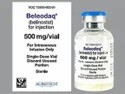
Patients with renal impairment also need to adjust the dose of belinostat. Patients with moderate renal impairment should adjust the dose to 500mg/m², intravenously infused over 30 minutes, once daily, on days 1 to 5 of a 21-day cycle. Patients with severe renal impairment should avoid the use of belinostat. For patients with mild renal impairment, if renal function indicators are stable, dose adjustment is usually not recommended, but renal function needs to be monitored regularly.
In addition, for patients known to be homozygous forUGT1A1*28 allele, it is recommended that the starting dose of belinostat be reduced to 750 mg/m² because this gene variation may affect the metabolism and clearance of the drug. At the same time, concomitant use of belinostat with UGT1A1 inhibitors should be avoided as this may increase the risk of drug toxicity. If concurrent use cannot be avoided, the dose of belinostat should be reduced by 25% to ensure treatment safety.
In short, the use method and dosage of belinostat need to be individually adjusted according to the specific conditions of the patient. Doctors should comprehensively consider the patient's liver function, kidney function, genotype, disease severity and other factors to formulate a reasonable treatment plan. Patients should strictly follow the doctor's instructions during use, take the medicine on time and in the right amount, and pay close attention to changes in their symptoms. If any discomfort or abnormal reaction occurs, the doctor should be informed in time for timely adjustment and treatment.
Reference materials:https://www.drugs.com/search.php?searchterm=BELEODAQ
[ 免责声明 ] 本页面内容来自公开渠道(如FDA官网、Drugs官网、原研药厂官网等),仅供持有医疗专业资质的人员用于医学药学研究参考,不构成任何治疗建议或药品推荐。所涉药品可能未在中国大陆获批上市,不适用于中国境内销售和使用。如需治疗,请咨询正规医疗机构。本站不提供药品销售或代购服务。


