
.jpeg)
Main indications for ruxolitinib cream: In addition to treating psoriasis and eczema, what other diseases can it be used for?
Ruxolitinib cream (Opzelura) is a topical drug that regulates immune responses and reduces skin inflammation by inhibiting the activities of JAK1 and JAK3. It is currently approved for the treatment of atopic dermatitis (eczema) and moderate to severe psoriasis (especially localized psoriasis). However, in addition to these primary indications, ruxolitinib cream has also shown potential in clinical studies to treat a number of other immune-related dermatoses.
One potential indication for ruxolitinib cream is vitiligo, a skin disease caused by the loss of pigment. Patients with vitiligo have irregular white spots on their skin due to local destruction of pigment cells. Research shows that ruxolitinib cream may help restore skin pigmentation by regulating the skin's immune response, especially for patients with early-stage vitiligo. By inhibiting the immune system's attack on the skin's pigment cells, ruxolitinib cream may be effective in slowing the progression of the disease and promoting the recovery of pigment.
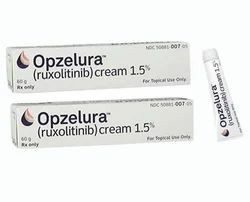
In addition to psoriasis itself, ruxolitinib cream may also help treat psoriatic arthritis associated with psoriasis. Psoriatic arthritis is a chronic inflammatory disease affecting the joints, often accompanied by skin damage. Although ruxolitinib cream is primarily used for cutaneous manifestations, it may provide some adjunctive therapeutic benefit in reducing joint pain and inflammation due to its immunomodulatory effects. By suppressing the local immune response, ruxolitinib cream may help reduce symptoms in patients, especially those with psoriasis who have milder joint inflammation.
Ruxolitinib cream may also be used to treat other types of immune-mediated skin diseases, such as cutaneous lupus erythematosus (SLE) and contact dermatitis. These diseases are often triggered by abnormalities in the immune system, leading to inflammation, erythema, and ulcers on the skin. Ruxolitinib cream, when applied topically, suppresses the immune response in areas of skin, thus reducing the clinical manifestations of these conditions. In addition, ruxolitinib cream has shown potential in the treatment of mild to moderate contact dermatitis and immune system-driven skin conditions, although these uses are still in clinical investigation.
Ruxolitinib cream may also play a role in local manifestations of systemic autoimmune diseases such as systemic lupus erythematosus (SLE). SLEUsually accompanied by skin damage, ruxolitinib regulates the skin's immune response through topical use and helps relieve skin symptoms, such as erythema, ulcers, etc. Although ruxolitinib cream is not a primary treatment for SLE, it may be an effective adjunctive treatment, especially when controlling localized skin damage.
In conclusion, in addition to its use in the treatment of psoriasis and eczema, ruxolitinib cream may have potential efficacy in a variety of immune-related skin diseases due to its immunomodulatory effect. However, when using this drug to treat other diseases, it still needs to be done under the guidance of a doctor, and reasonable adjustments must be made based on the specific condition and drug effect.
Reference materials:https://www.opzelura.com/
[ 免责声明 ] 本页面内容来自公开渠道(如FDA官网、Drugs官网、原研药厂官网等),仅供持有医疗专业资质的人员用于医学药学研究参考,不构成任何治疗建议或药品推荐。所涉药品可能未在中国大陆获批上市,不适用于中国境内销售和使用。如需治疗,请咨询正规医疗机构。本站不提供药品销售或代购服务。


