
.jpeg)
Talazoparib/talazopanib Instructions: Dosage, Dosage and Precautions
1. Indications
Talazoparib is a poly(ADP ribose) polymerase (PARP) inhibitor, mainly used to treat HER2-negative breast cancer patients with BRCA mutations and metastatic castration-resistant prostate cancer patients with homologous recombination repair (HRR) gene mutations. Its mechanism of action prevents cancer cells from repairing DNA damage by inhibiting the activity of PARP proteins, thereby enhancing the death of cancer cells, especially in tumor cells with impaired DNA repair mechanisms.
2. Usage and dosage
For breast cancer patients, the recommended initial dose is1 mg, taken orally once a day. Patients can choose to take it before or after meals. Patients should continue treatment until disease progression or unacceptable side effects occur. If the patient cannot tolerate the 1 mg dose, the dose can be gradually reduced as needed, to a minimum of 0.25 mg per day. If the dose is still not tolerated after reducing the dose to 0.25 mg daily, treatment should be discontinued.
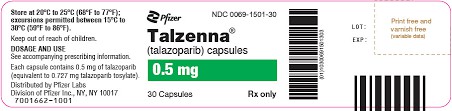
For patients with prostate cancer, the initial dose is0.5 mg once daily. According to the patient's tolerance, the dose can be gradually adjusted to a minimum of 0.1mg per day. If 0.1 mg daily is not tolerated, treatment should be discontinued.
3. Precautions
1. Drug interactions: Talazoparib may interact with other drugs, especially when used in combination withP-glycoprotein (P-gp) inhibitors, the dose needs to be adjusted carefully. If used concomitantly with a P-gp inhibitor, the dose should be reduced to 0.75 mg/day. If P-gp inhibitor use is discontinued, the original dose can be restored.
2. Adverse reactions: When using talazoparib, patients may experience some adverse reactions, common ones including anemia, leukopenia, thrombocytopenia and other blood system problems. Rash, nausea, fatigue, and gastrointestinal discomfort are also common side effects. When these symptoms occur, the medication may need to be suspended or the dosage adjusted.
3. Patients with renal dysfunction: For patients with renal dysfunction, special caution is required when using talazoparib. This drug may be less well tolerated by patients with renal insufficiency, requiring dose adjustment based on specific renal function.
4. Long-term use and discontinuation: For breast cancer patients, if the disease is controlled and maintainedFor more than 6 months, discontinuation of medication can be considered, but the condition needs to be monitored regularly to observe whether there is recurrence. For men with prostate cancer, long-term use is often required, but the drug's efficacy and tolerability should also be evaluated regularly.
Talazoparib, as aPARP inhibitor, has significant anti-cancer effects. Especially in the treatment of BRCA mutation-related cancers, it can effectively inhibit the repair mechanism of cancer cells and enhance the therapeutic effect. When using this drug, patients need to adjust the dose according to the doctor's guidance, conduct regular blood monitoring, pay attention to the side effects of the drug, and adjust the dose appropriately when renal insufficiency or combined with other drug treatments. Reasonable dose adjustment and continuous monitoring can effectively improve the safety and effectiveness of treatment.
Reference materials:https://www.talzenna.com/
[ 免责声明 ] 本页面内容来自公开渠道(如FDA官网、Drugs官网、原研药厂官网等),仅供持有医疗专业资质的人员用于医学药学研究参考,不构成任何治疗建议或药品推荐。所涉药品可能未在中国大陆获批上市,不适用于中国境内销售和使用。如需治疗,请咨询正规医疗机构。本站不提供药品销售或代购服务。


